

A polymer name is only the beginning
Two deliveries described as polyethylene may present very different production tasks. One could be segregated film trim; another could be washed flakes from rigid containers. Their handling, source history and condition matter alongside resin identity. The first purchasing decision is therefore to describe the actual material stream, not to choose a machine simply because its brochure lists PE.
Film and rigid scrap are useful categories for organizing questions, but neither is a complete specification. Even within a category, different sources can bring different color, additives, moisture and contamination. Keep the source description attached to every sample and record which parts of the stream are expected to vary. A representative brief shows both normal material and realistic limits.
Granulator or pelletizer: which step do you mean?
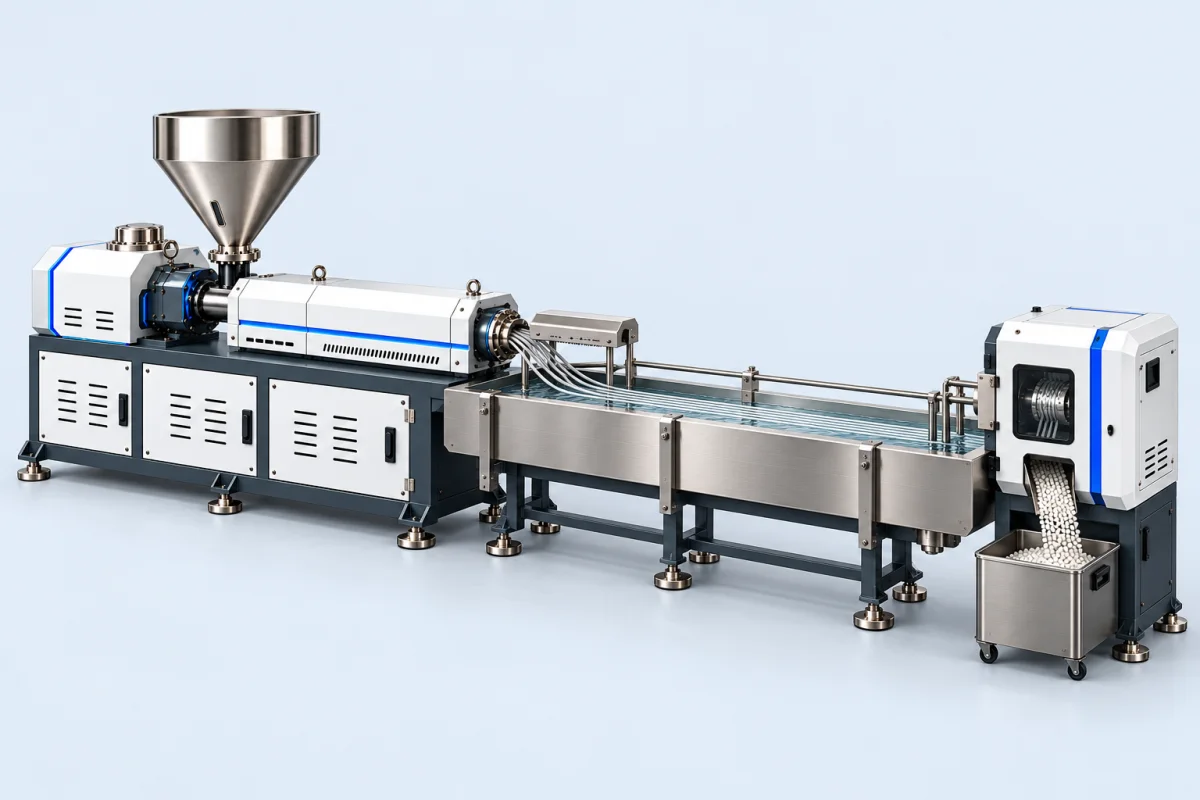
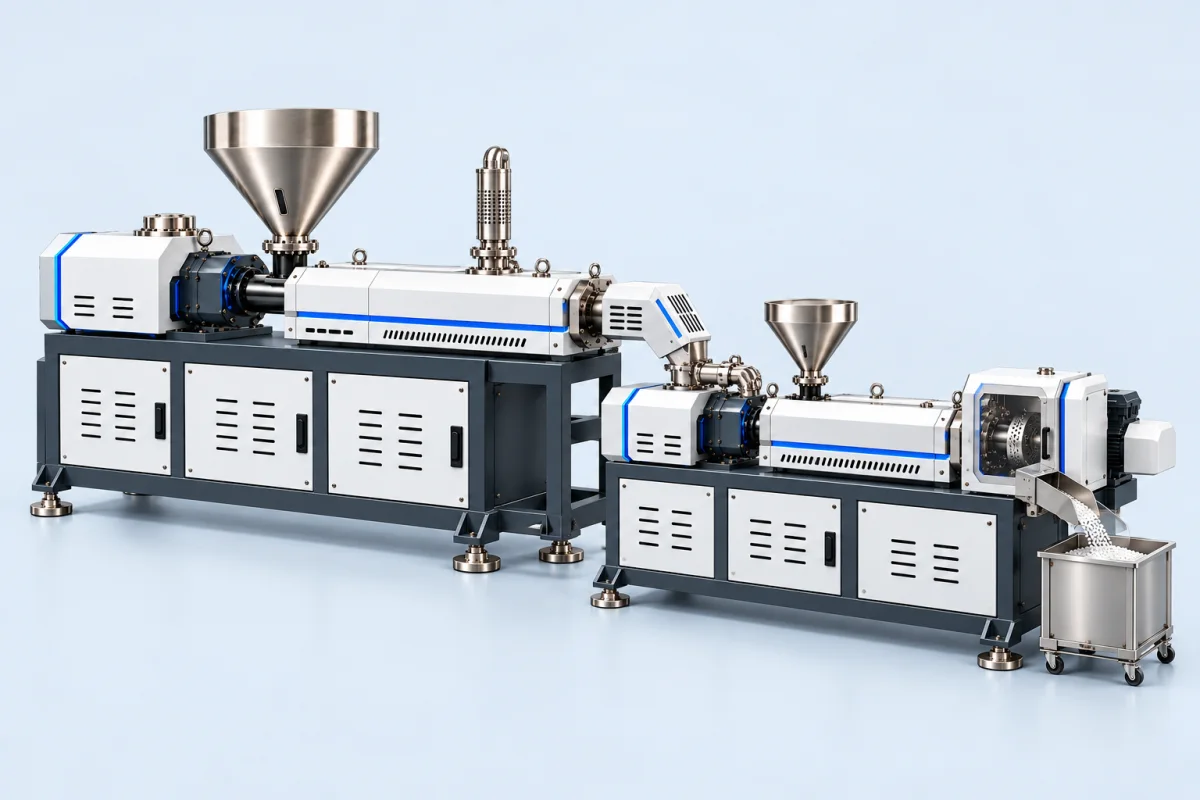
In many equipment catalogues, a plastic granulator is a cutting machine that reduces scrap to smaller pieces. A recycling pelletizing line instead processes prepared material through a melt stage and pellet finishing. Suppliers do not always use these names consistently, so state the required input and output when requesting equipment. A bag of regrind and a bag of melt-processed pellets describe different process results.
If you already have a granulator, describe the particle size, fines and contamination in its output. That information helps define the feed supplied to a downstream recycling extruder. If the incoming material is whole rejects or bulky scrap, identify size reduction as a separate project responsibility. This distinction prevents an enquiry for a pelletizing system from being answered with a cutting machine quotation.
Start with how the material moves
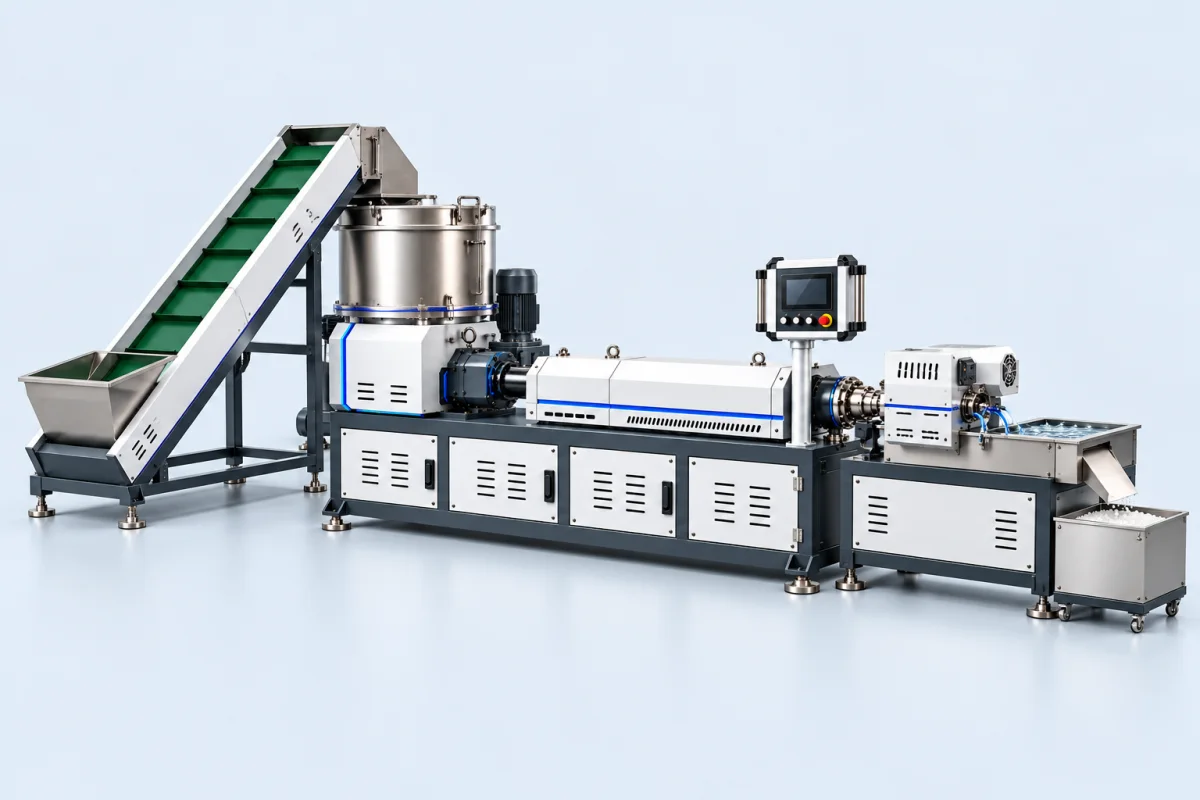
Loose film can occupy substantial storage volume while delivering relatively little mass. Its shape can make transfer and consistent intake difficult. Rigid regrind often behaves differently, but irregular pieces, fines and a broad size distribution still need attention. Ask how the proposed feeding arrangement will address the observed material behavior rather than assuming a hopper will settle the problem.
Describe the delivery format: bales, rolls, bags, bins or direct transfer from another process. Record unloading and replenishment methods and the space available for temporary storage. These details help suppliers discuss a suitable feeding route. They also reveal operating work that a machine-only comparison can miss, such as breaking down a bale or transferring a nearly empty container.
| Selection question | Film scrap | Rigid regrind |
|---|---|---|
| Delivery form | Loose film, rolls or prepared flakes | Prepared pieces or flakes with a defined size distribution |
| Intake review | Bulk behavior, film format and preparation method | Particle shape, fines and consistency of hopper delivery |
| Quality review | Polymer identity, print, adhesive and moisture history | Polymer identity, fillers, contamination and previous use |
| Quote boundary | Specify preparation before the pelletizing stage | Specify any size reduction, washing and drying responsibilities |
Scroll horizontally to compare all columns.

Preparation determines the next process boundary
Clean production offcuts and post-consumer material should not be grouped together merely because they share a shape. State what has already been separated, reduced in size, washed and dried. For washed material, distinguish the condition leaving the preparation equipment from the condition after storage and transport. The processing stage receives the latter, which may be different.
A project can start at several points in that chain. If you are buying only the pelletizing section, define the prepared feed it must receive. If preparation equipment is included, define the material it starts with and the handover between stages. Avoid the phrase complete recycling line without a written scope that makes these boundaries visible.
Name the unwanted material
Use specific descriptions for observed contamination: labels, paper, grit, metal, other polymers or unknown residues. Record what is known and what needs analysis. Film printing and adhesives raise different questions from a rigid batch containing caps or mixed resin pieces. The right response is not automatically a finer screen; it may involve improved separation or a narrower accepted feed range.
Melt filtration should not be treated as a universal separator for mixed plastics. Materials that melt together do not become compatible simply because they pass a filter. Ask which contaminants a proposed process is intended to address, which remain upstream responsibilities, and how the result will be evaluated. Keep those answers attached to the sample description used for the trial.
Design a sample set that represents purchasing reality
Sending only the cleanest bag makes an evaluation easier but less informative. Select material from routine deliveries and from the limits you expect the line to encounter. Keep lots separate and label source, date, preparation and storage condition. Photographs are useful context, but they cannot replace physical samples or the information needed to interpret them.
Prepare a short sampling record that another person can follow later. Describe how the sample was collected and whether different portions of the original lot were combined. The goal is not to invent a laboratory standard; it is to avoid presenting an exceptional handful as the whole supply stream. Discuss the required sample quantity and trial conditions with the supplier.
Work backward from the next use of the pellet
Recycling is not complete merely because uniform-looking pellets leave the cutter. Identify the next conversion process and its material acceptance requirements before selecting the production route. A feed suitable for one application may be unsuitable for another. Keep appearance, processing behavior and any required physical-property checks separate so a favorable result in one area does not obscure a problem elsewhere.
Ask the intended pellet user which evidence they need and how batches will be approved. Where no downstream buyer is yet defined, make that uncertainty part of the project decision. Equipment cannot supply a missing market specification. A conditional development plan is more useful than claiming that pellets from any film or rigid stream will be suitable for every application.
Use separate cases when the streams differ
If one plant plans to process both film and rigid scrap, write distinct operating cases. Each should identify the accepted feed, preparation route, desired output and changeover needs. Then discuss which equipment can reasonably be shared and what must change. A broad product list should not conceal different feeding arrangements or preparation requirements.
For ARKPM, send those cases with photographs, available samples and the proposed pellet use. The initial discussion can compare film recycling, rigid-plastic recycling and a staged pelletizing approach where justified. The purpose is to narrow the design question using real material evidence. A clearer boundary usually gives a more useful proposal than asking for a machine that processes everything.
Further technical reading
Manufacturer documentation can help explain process principles. These references do not describe ARKPM equipment or establish ARKPM performance claims.