跳到主要内容
Skip to content
Film scrap to pellets. Configured around your feed.

Plastic Film Recycling Machine

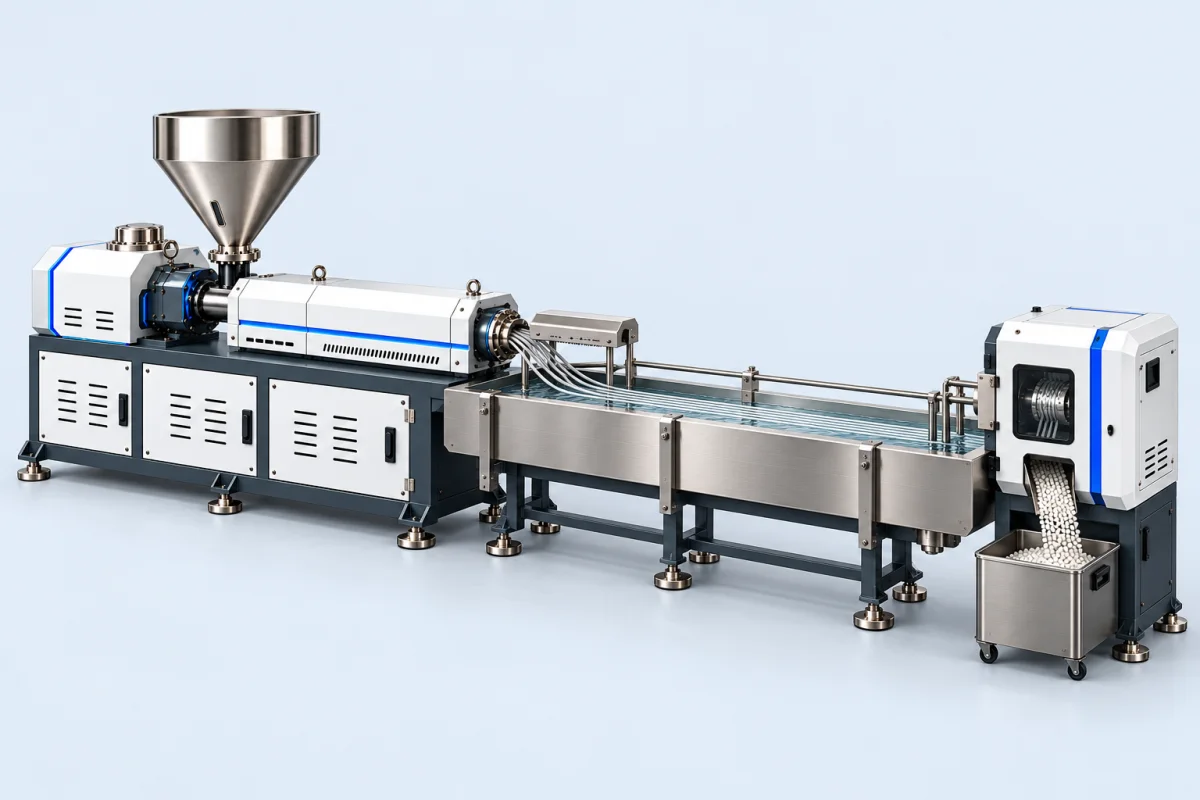
Specify a plastic film recycling machine for identified LDPE, LLDPE or assessed PP film. ARKPM connects film intake, extrusion, melt treatment and pellet collection around your incoming material, intended reuse and factory requirements.

Identified LDPE filmIdentified LLDPE filmPP film following application review
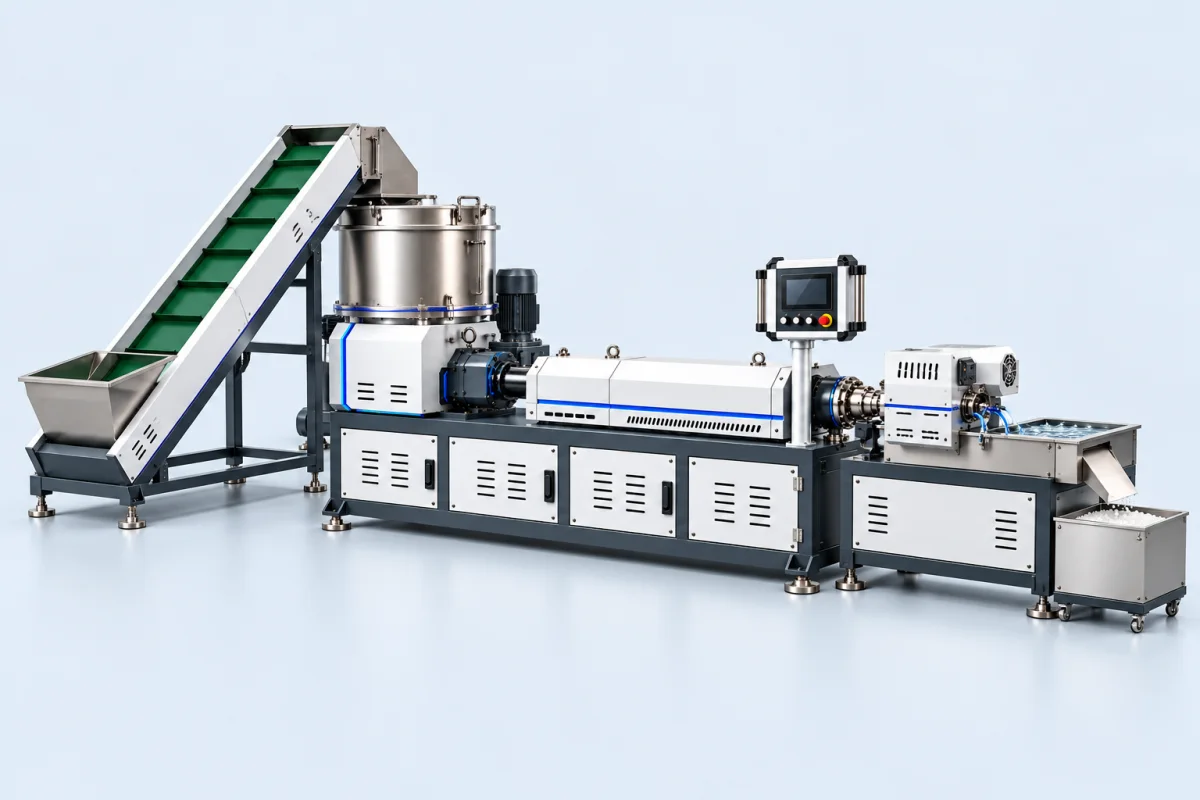
A configurable film recycling and pelletizing system
Equipment layout. Tailored to your production requirements.
THE APPLICATION

Start with what
the line needs to do.

Flexible scrap needs a feeding route that suits its physical form. Loose edge trim, rolled film and prepared washed flakes can share a polymer name while requiring different handling. ARKPM develops the equipment proposal from that distinction, then connects extrusion, filtration, venting and pellet finishing to the intended pellet application. For a PE film recycling project, identify the LDPE or LLDPE grade, printing history and preparation already completed. PP film is assessed against its own material information. Every proposal supports customization, with the incoming specification, included process stages and trial criteria recorded together.

Applications to discuss

  • Segregated production film trim
  • Prepared stretch-film scrap
  • Washed film flakes with a defined incoming specification
All configurations are reviewed against a defined material and product specification.
CONFIGURATION

The building blocks
of your line.

01

Film preparation and intake

Discuss rolls, loose film or flakes separately. The proposed conveyor, cutting and feeding arrangement should suit the actual bulk behavior, with access for removing unsuitable material before it reaches the extruder.

02

Melt treatment

Filtration and venting are selected around identified solids, residual moisture and print or adhesive history. Neither replaces upstream sorting, and suitability for a heavily printed stream requires evidence from representative material.

03

Pellet finishing

Review a compatible cutting, cooling, drying and collection arrangement. Pellet form, handling temperature, packaging method and downstream feeding expectations should be stated before the finishing equipment is finalized.

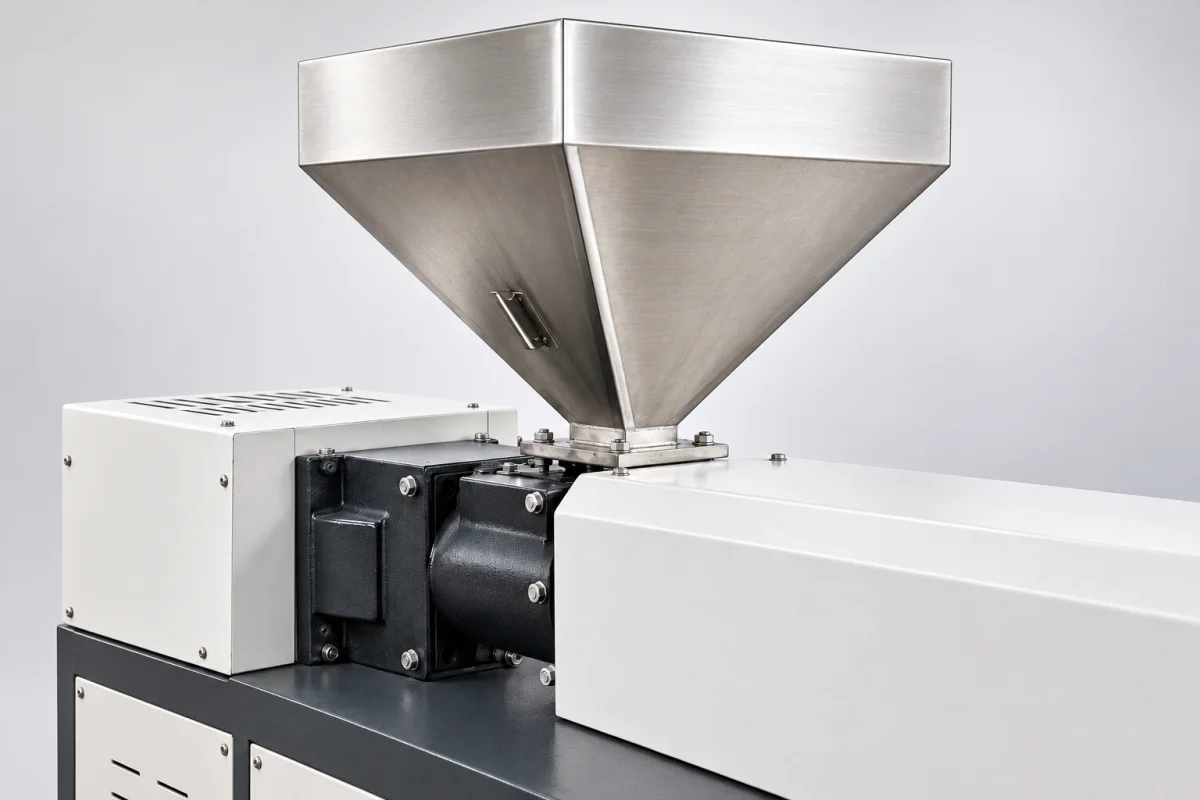
Extrusion feed hopper and inlet assembly
Feed hopper and inlet arrangement.

Feeding starts with material form

Film form and bulk density shape the feeding brief. Review how prepared material reaches the hopper, how operators load it and what access is needed for cleaning. Hopper and upstream handling arrangements can be customized around your preparation method and available space.
Extrusion strand die and melt outlet connections
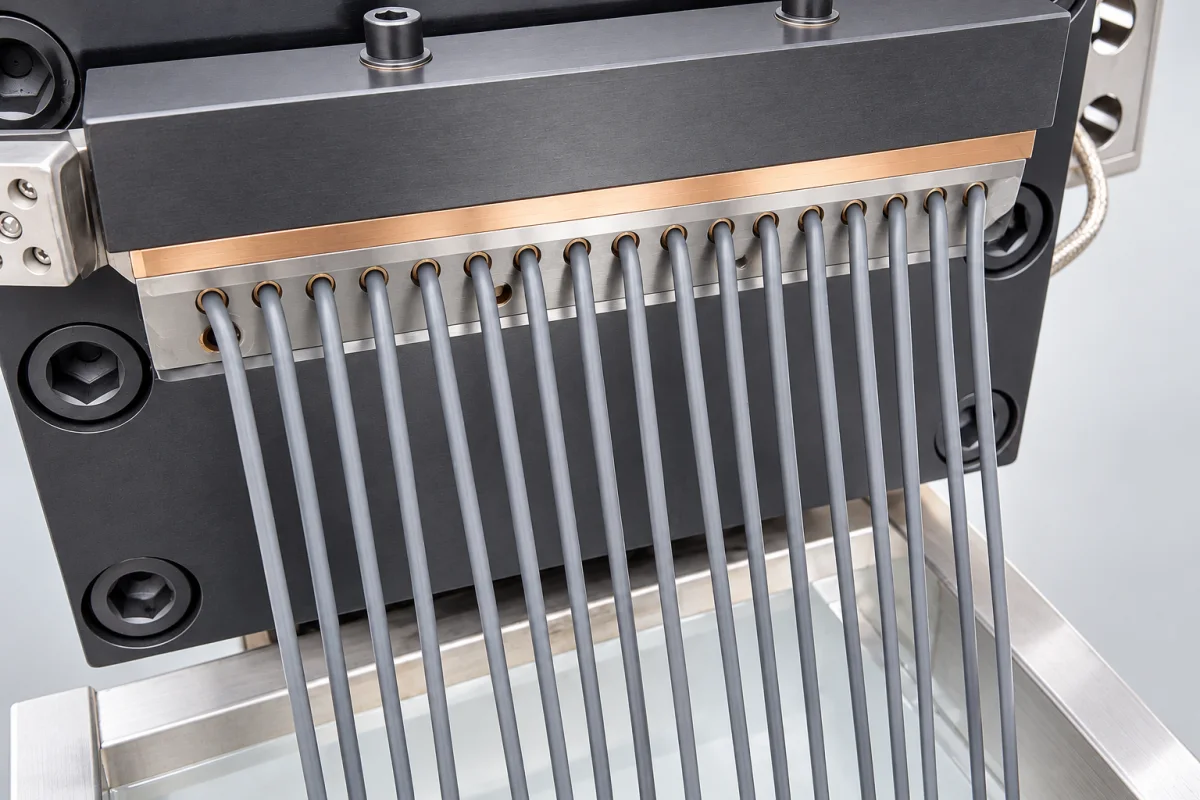
Strand die and melt outlet.

From melt outlet to strands

A strand die connects the melt outlet to downstream cooling and cutting. Discuss melt condition, strand handling, cleaning access and the intended pellet format when defining the finishing route. The die arrangement and downstream stages are configured around the agreed recycling process.

PROCESS THINKING

A considered route
through the process.

01

Characterize the film

Provide samples from normal production and less favorable batches. Record polymer identity, film form, moisture condition and visible contamination so the proposal is based on a realistic feed envelope.

02

Build a stable feed

Agree how material reaches the processing stage and which preparation steps are included. A consistent feed is part of the specification, rather than an assumption hidden behind a nominal output figure.

03

Check the resulting pellets

Define a trial plan that records input condition, operating stability, filter behavior and pellet acceptance. Evaluate the material against its intended conversion process before treating the project as technically resolved.

PROJECT SPECIFICATION

The parameters we define together.

These are project inputs and configuration decisions. Performance is agreed against the material and product specification.

ParameterWhat to define
Polymer and film formIdentify LDPE, LLDPE or PP, source, printing and additives. Supply photographs of rolls, loose trim or prepared flakes to establish the intake arrangement.
Incoming conditionDescribe moisture, contamination, film thickness and existing preparation. Specify the condition delivered to the supplied equipment after storage and transport.
Production requirementState the desired saleable pellet output and operating schedule. Capacity is assessed against representative film and the agreed pellet quality, not a universal feed assumption.
Melt-treatment dutyReview solids, printing and volatile-related concerns to define filtration and venting requirements. Include service access and the expected method of checking pellet quality.
Pellet handlingDefine the intended reuse, cutting and cooling requirements, collection format and sampling method. Confirm which finishing stages belong in the equipment supply.
Factory interfacesProvide available floor space, power and cooling information, plus connections to existing preparation equipment. Identify installation and utility responsibilities in the quotation.
This family addresses film recycling through extrusion and pelletizing. Sorting, washing and drying are included only when explicitly listed in the project scope; the condition of incoming film must be agreed.
CUSTOMIZATION

Made specific to your project.

Every ARKPM product family supports customization. These are the decisions that give the configuration its purpose.

Feedstock-specific arrangement

The film preparation and feeding route can be discussed around your available material, storage method and operator workflow. A single arrangement should not be assumed suitable for every film format.

Quality and maintenance priorities

Discuss filter access, screen-change expectations, vent maintenance and collection points together. The selected options should fit your contamination range and maintenance resources, rather than simply adding more processing stages.

Existing plant interfaces

Identify current washing, drying or conveying equipment and its delivery condition. Interface responsibilities, control signals and buffer requirements should be documented before the new line is connected to your plant.

YOUR PROJECT BRIEF

A useful proposal
begins here.

Share the information you have. Keep open questions visible so they can be resolved in the technical discussion.

What to send us

  • Film samples and polymer identification
  • Photos of rolls, loose scrap or flakes
  • Moisture and contamination information
  • Target pellet use and acceptance criteria
  • Available utilities, floor plan and operating schedule
QUESTIONS ABOUT THIS LINE

Before you choose
a configuration.

Can this line process mixed plastic film?

Only a characterized mixture can be assessed. Different polymers, laminates and unknown additives can change the result. A general film label is insufficient to establish a workable recycling route.

Is washing included?

It is included only when specified in the agreed scope. State whether material arrives clean, washed, mechanically dried or untreated; these conditions change the equipment and utilities required.

What output can I expect?

Output must be evaluated for the agreed feedstock, filtration and pellet criteria. A machine headline cannot establish saleable production across different film conditions or operating schedules.

What affects the price of a film recycling machine?

The film format and preparation condition, feeding arrangement, required output, melt-treatment duty and pellet finishing scope shape the quotation. Identify existing equipment and supply boundaries so proposals can be compared on the same basis. ARKPM quotes a defined configuration rather than a universal machine price.

What should I send for an initial line proposal?

Send polymer information, photographs of the actual film, available samples, preparation details and the intended pellet use. Add your output target, country, floor plan and utilities. If a detail is unknown, mark it as unresolved so the technical review can address it.

PLAN THE PURCHASE

Read before you request a quotation.

CONTINUE EXPLORING

Related product families.

A rigid-plastic recycling and pelletizing system
Plastic recycling machines · Custom configuration

Rigid Plastic Recycling Machine

Process identified rigid regrind through a custom extrusion and pelletizing arrangement, with particle condition, feeding, filtration and the next pellet application considered together in the project brief.

Explore this line
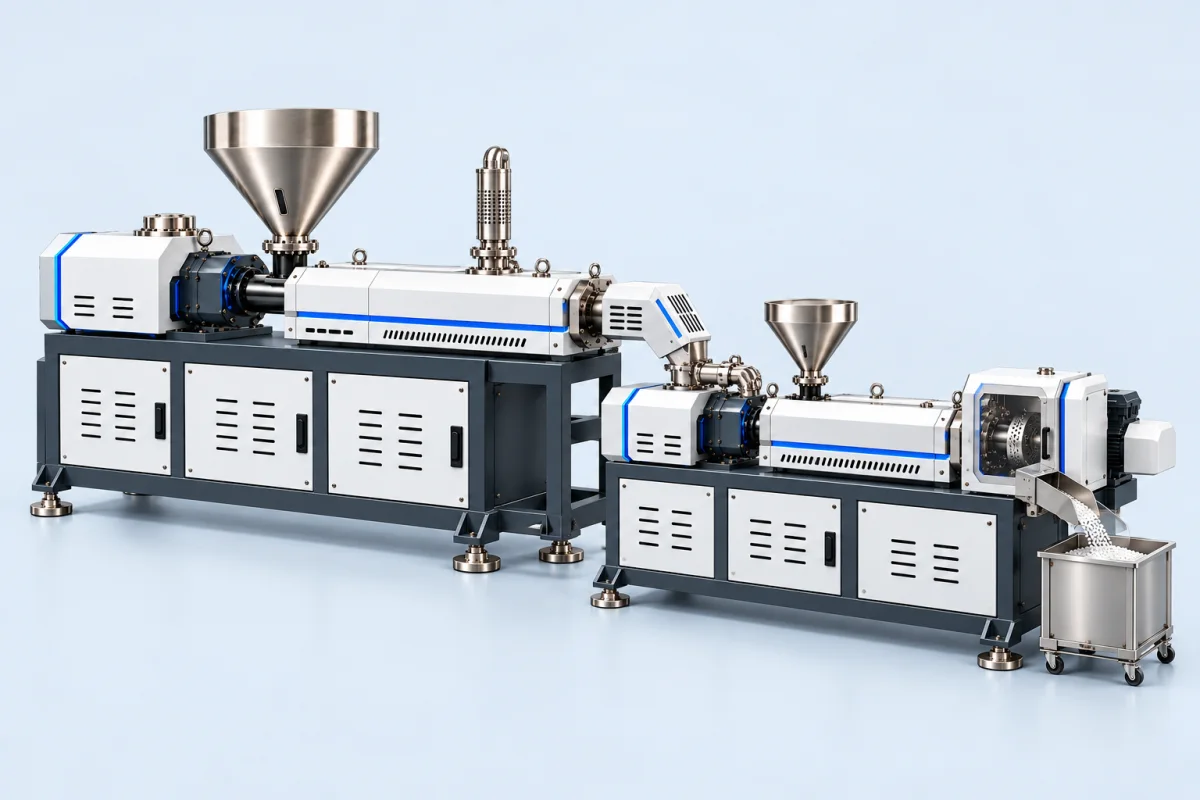
Two connected plastic pelletizing stages
Plastic recycling machines · Custom configuration

Two-Stage Pelletizing Machine

Assess two connected processing stages when the material review supports separate melt-treatment duties, with transfer, filtration, venting and pellet finishing defined together for the proposed recycling process.

Explore this line

Configure your recycling project.

Share your material, output requirements and site information for a project-specific proposal.

Request a line proposal