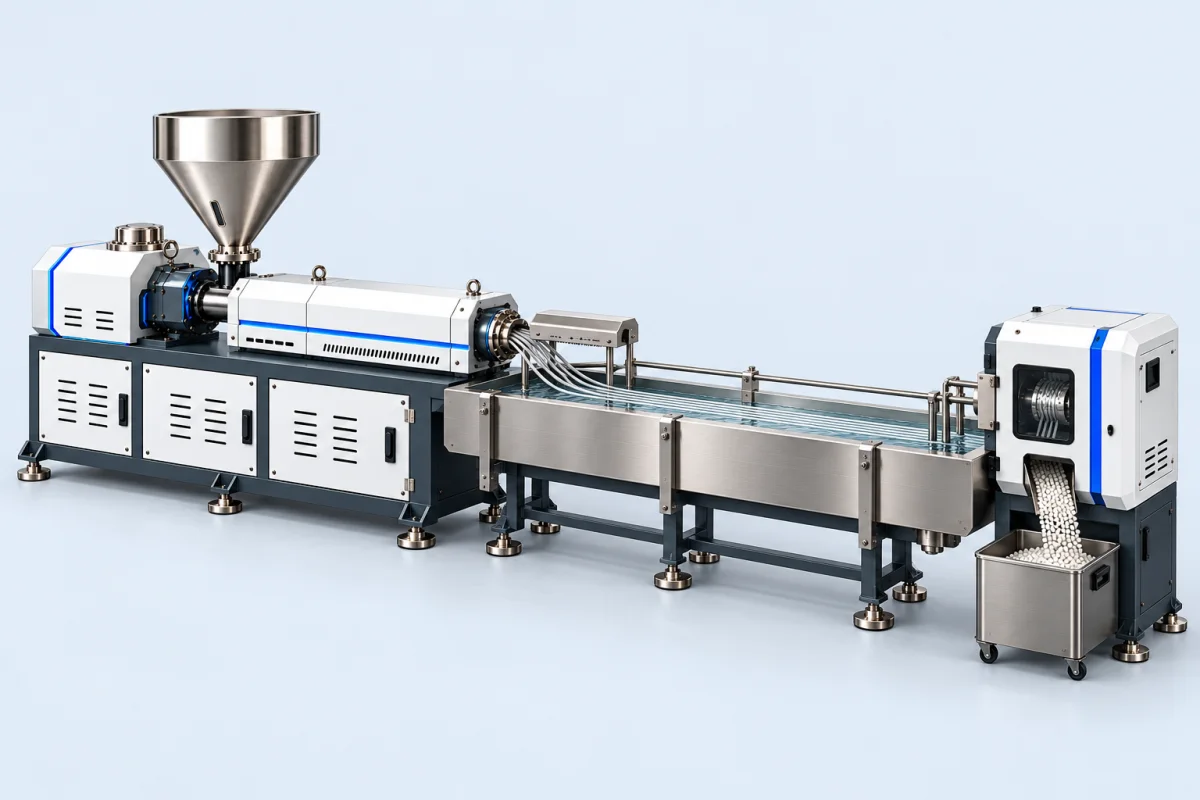


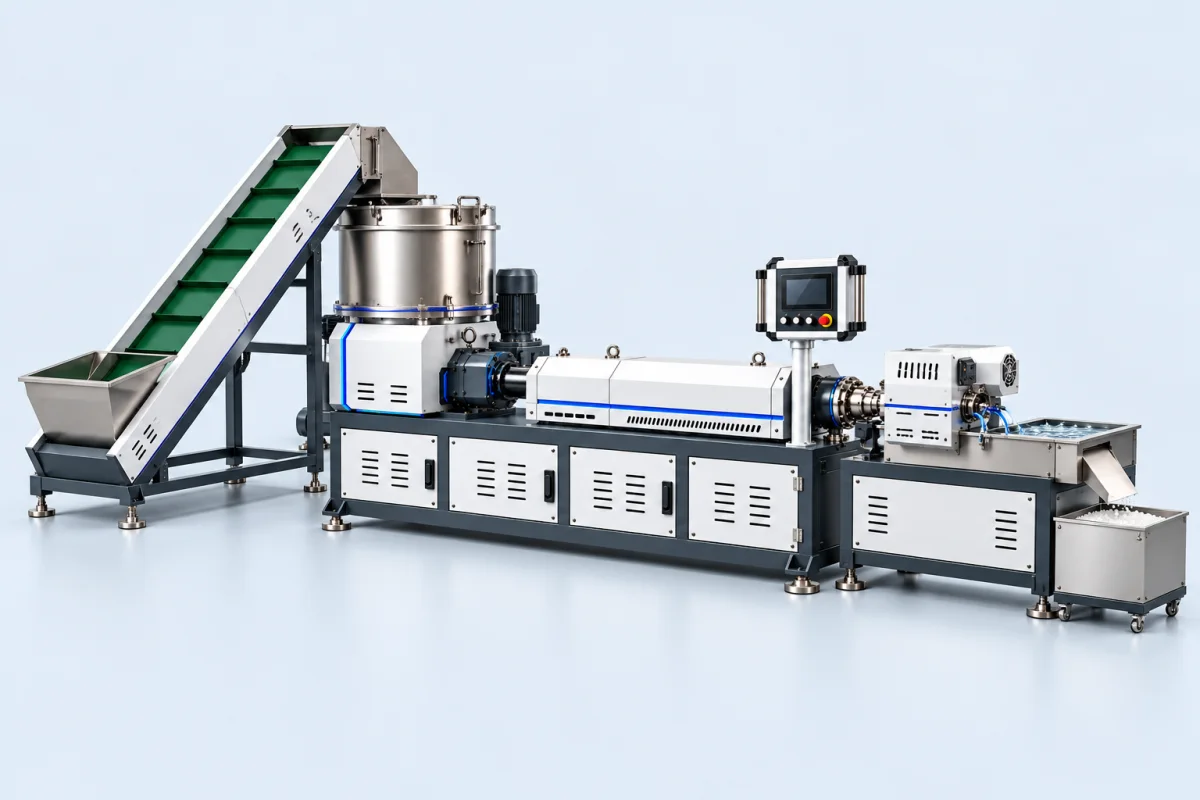
What determines a plastic recycling machine price?
A plastic recycling machine price depends on the material the equipment must receive, the pellet quality it must deliver and the equipment included between those points. A quotation for an extruder with a pelletizer is different from a proposal that also covers feeding, preparation, melt treatment and finished-pellet handling. Comparing the totals before comparing these boundaries can hide a substantial difference in the investment.
ARKPM equipment is configured for a defined project, so this guide does not assign a universal price to a film, rigid-plastic or two-stage line. Its purpose is to help you assemble a budget that can be reviewed, then request a quotation with clear assumptions. Begin with one primary production case and record any alternative feedstocks separately. This gives the commercial comparison a technical basis.
Feedstock changes the required equipment
Identify the polymer, source and physical form of the scrap. Loose film, rolled trim and rigid regrind place different demands on intake and material handling. Explain whether the incoming material is already separated, reduced in size, washed or dried. Those steps cannot be assumed included merely because a quotation is described as a complete recycling line.
Provide representative samples and photographs, including material from less favorable batches. Record print, adhesive, moisture, fines and visible contamination where relevant. A supplier may need to review feeding, filtration or venting options in response to that information. The question is which processing duty your material requires, rather than how many options can be added to a standard machine.
Define accepted output before comparing capacity
State the intended use of the recycled pellets and the quality checks required for that use. Include collection format, appearance priorities and material-property questions that the next processing operation needs answered. The proposed equipment must be assessed against this finished-output definition, not simply against an advertised maximum mass flow.
Keep steady operating output separate from accepted pellets produced over a shift. Startup, screen changes, material changeovers and rejected output affect the relationship between the two. Ask each supplier to explain the feed condition, treatment options and quality criteria behind its proposed output. A higher headline capacity is not directly comparable if it assumes a cleaner feed or a different pellet acceptance standard.
Separate equipment price from the installed project budget
Ask for an included, optional and by-others schedule. Define where the supplied process starts and where it ends, including transfer points to any retained equipment. If your plant already has a granulator, washer, dryer or storage system, provide its discharge condition and interface details. Reusing equipment can change the supply scope, but its suitability still needs review.
The equipment quotation is only one part of the project budget. Keep freight, insurance, destination handling, installation work, utility connections and initial consumables visible as separate allowances where they are not included. Confirm responsibilities and delivery terms in the commercial offer. Do not assume that the supplier of the main machine also supplies every cable, pipe, lifting operation or site service.
| Budget item | What to compare | Who confirms it |
|---|---|---|
| Process equipment | Feeding, extrusion, melt treatment, pelletizing and collection boundaries | Equipment supplier |
| Preparation interfaces | Incoming condition and any sorting, size reduction, washing or drying scope | Buyer and relevant equipment suppliers |
| Site and utilities | Foundations, electrical connections, water circuits, extraction and access | Buyer’s site team |
| Delivery and setup | Packing, freight, unloading, positioning and agreed installation support | Commercial offer and site plan |
| Trials and startup | Material, utilities, sample checks, consumables and training scope | Agreed evaluation plan |
Scroll horizontally to compare all columns.
Which options can change the quotation?
Filtration, degassing and pellet finishing should be specified by the problem they must address. Filter area, screen-changing method, vent services and the selected cutting or cooling arrangement can change the equipment and operating scope. Ask why each option is proposed, what information supports the choice and what remains subject to sample evaluation.
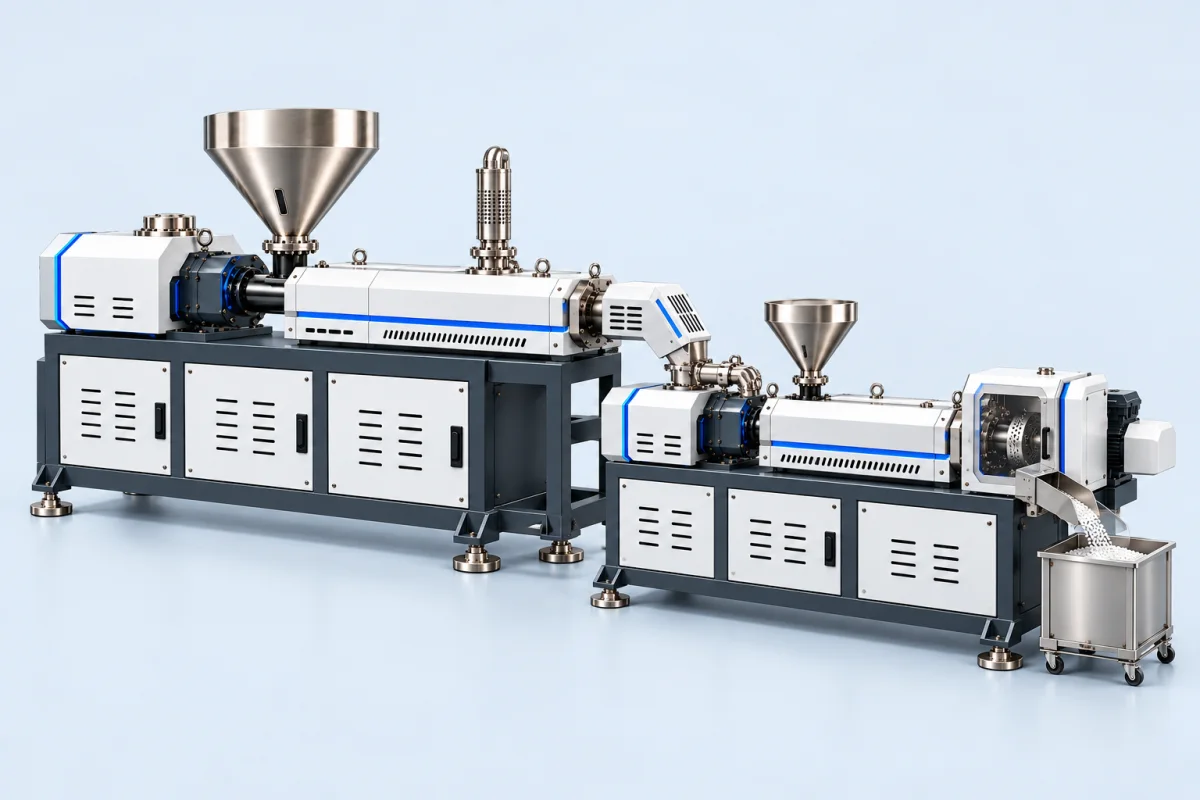
A two-stage arrangement should have a stated process rationale. It introduces another stage and additional interfaces; the stage count alone does not establish the best result for your feedstock. Review a simpler configuration when it can reasonably address the same duty. This comparison helps you distinguish required process equipment from optional convenience or expansion provisions.
Include the costs of running the line
Build an operating-cost worksheet for the agreed production case. Identify electricity, water-system operation, labor, filters and other consumables, routine maintenance, waste handling and material lost during startup or changeover. Use your site tariffs and staffing plan. Request the supplier’s assumptions for equipment-related demands instead of treating an installed motor rating as the actual electricity used during a shift.
Keep the denominator consistent when comparing operating costs. A cost per accepted kilogram should use accepted finished pellets from the same evaluation period, not nominal extruder output. Record normal servicing and interruptions alongside production. Your worksheet can then show how different feed conditions or maintenance expectations affect the result without presenting an unsupported payback or energy-saving promise.
Price the evaluation and startup scope clearly
Agree what a trial will demonstrate: the material lot, its preparation condition, the operating period, the measurements and the acceptance authority. Record how filter servicing, interruptions and sample collection will be handled. A demonstration on an easy feed should not stand in for the operating case used to justify your proposed configuration.
Clarify which activities are included before shipment and which belong at your site. Ask who provides trial material, utility services, installation labor and the necessary measuring equipment. Identify what training or operating documentation the offer includes and how unresolved trial items will be recorded. These details let you compare the service scope as carefully as the machine components.
Compare quotations using one revision of your brief
Give every supplier the same material description, output requirement and layout revision. Compare exclusions, utility assumptions and acceptance conditions row by row. When one proposal is materially lower in price, first check whether it starts with the same prepared feed and ends with the same collection stage. Ask for differences to be explained in writing before treating the totals as competing offers.
For an ARKPM quotation discussion, send your resin identification, feedstock photographs, preparation history, target pellet application, desired production output, destination country and available site information to [email protected]. Identify which project inputs are confirmed and which remain estimates. ARKPM supports custom configurations across its recycling product families; the final offer should state the agreed scope and the remaining technical review steps.
- Identify one primary feedstock and its preparation condition.
- State the required pellet use and acceptance checks.
- Separate equipment supply from site work and services.
- Compare quote exclusions and optional items on the same basis.
- Request a project-specific proposal rather than a generic machine price.
Further technical reading
Manufacturer documentation can help explain process principles. These references do not describe ARKPM equipment or establish ARKPM performance claims.