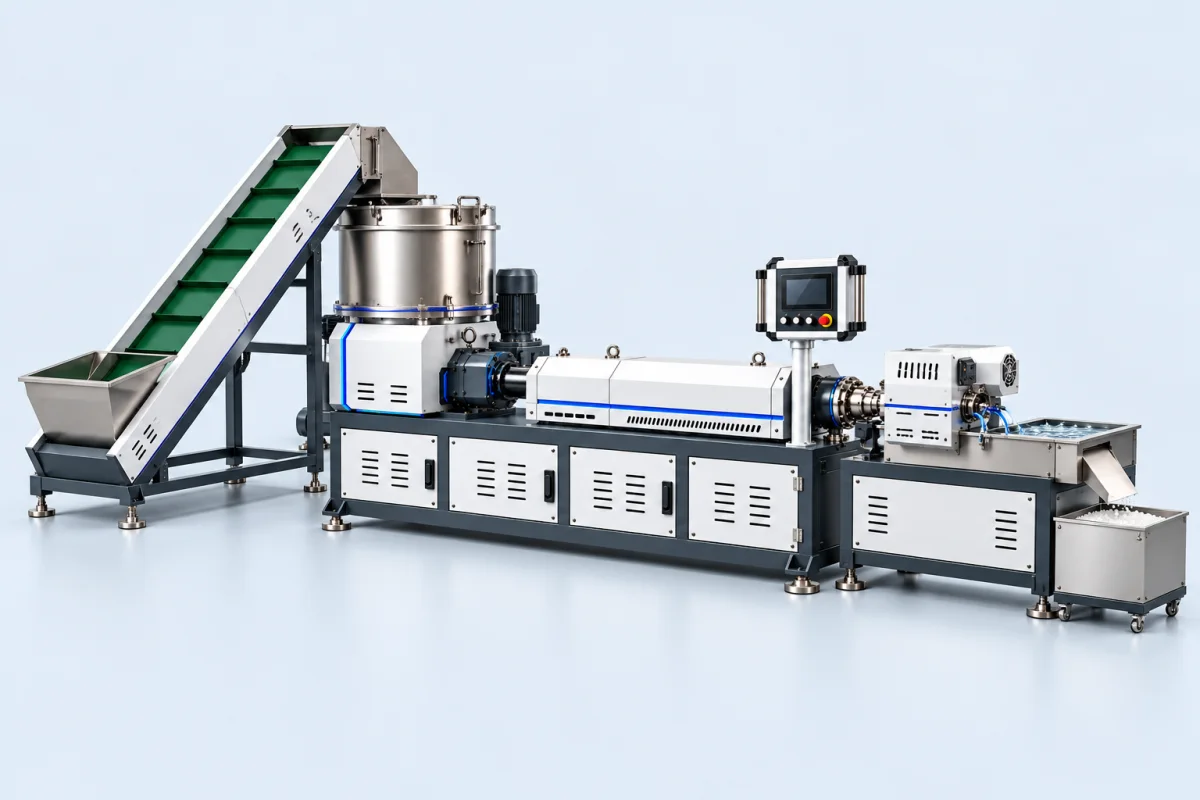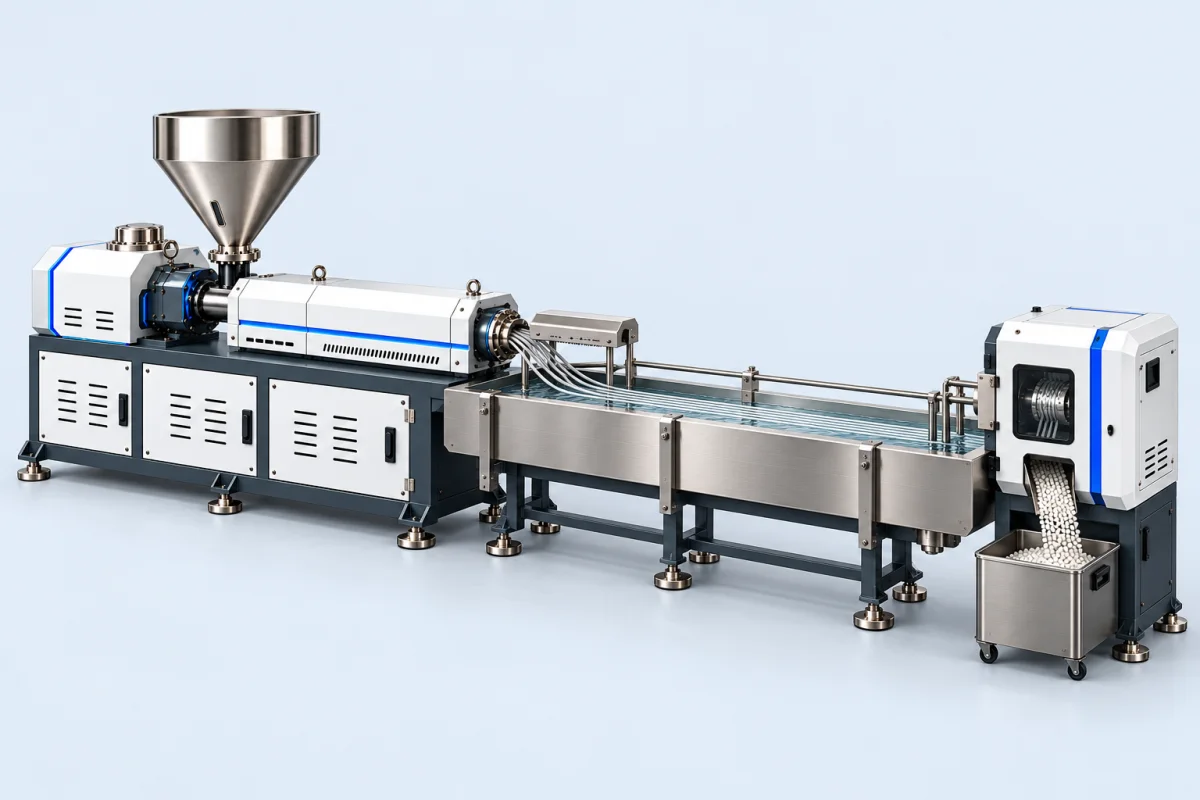

Melt filtration and degassing perform different duties
Filtration and degassing are often listed together in recycling proposals, but they address different process duties. Melt filtration targets suitable solid contaminants within the melt stream. Degassing addresses gases or volatile substances under the conditions created by the process. Neither description establishes a universal cleaning capability. Start by naming the problem and the result that must be demonstrated.
Translate observations into questions without jumping to a hardware answer. Visible specks, unstable strands, bubbles or odor may prompt investigation, but appearance alone does not identify a cause. Provide feed history, sample information and existing test results where available. A proposal should state what its treatment stages are intended to do and where the evidence is still incomplete.
| Process question | What to establish |
|---|---|
| Solids filtration | Which solid contaminants are expected, and what filter service arrangement suits the duty? |
| Degassing | Which moisture or volatile concerns need assessment under the proposed process conditions? |
| Upstream preparation | What must be removed or controlled before material reaches the melt stages? |
| Acceptance evidence | Which output checks and operating records will show whether the treatment meets the brief? |
Scroll horizontally to compare all columns.
Specify the filter as part of a system
A filter proposal needs more context than a screen designation. Ask about the expected contamination, material behavior, operating flow and permitted interruptions. Review the filtration area and service arrangement alongside the chosen filtration grade. Suppliers offer different screen-changing approaches because applications differ; selecting the finest available screen without a process basis can create an unhelpful comparison.
Define how operators will recognize the need for service and what happens during a screen change. Ask which information is measured, what is recorded and what consumables are required. Include access and handling arrangements in the layout review. A filter that looks convenient on a process drawing still needs a practical maintenance plan in the actual plant.
Define what venting is expected to address
Material preparation, melt condition and the design of the venting stage influence the degassing discussion. State whether the incoming concern is residual moisture, print history, known volatile residues or an unresolved odor issue. Do not use a generic vacuum option as a substitute for understanding those differences. The proposed duty should be tied to a defined feed condition.
Ask about the associated services and upkeep, including collection or treatment of extracted material where required by the design. Identify who provides the necessary connections and who evaluates plant-specific environmental requirements. Keep equipment selection and emissions approval as distinct responsibilities. A pump description alone does not explain what the installation will require over a normal operating shift.
Ask why the process is arranged that way
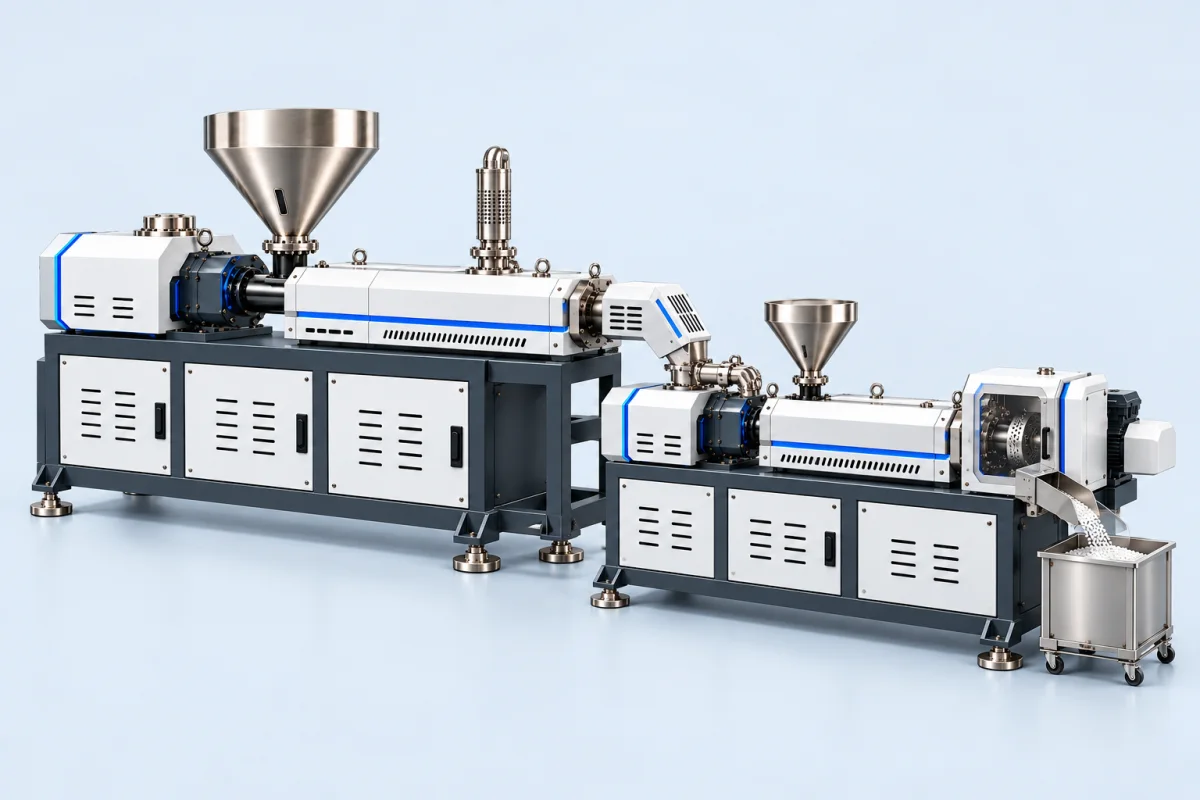
Treatment order is a design decision, not a rule that every recycling line shares. Manufacturers use different arrangements for material preparation, melting, filtration and venting. Ask the supplier to explain the proposed sequence for your application. The explanation should connect each stage to the incoming material and final pellet requirement rather than relying on the number of stages as proof of quality.
This is particularly important when considering a two-stage pelletizing line. Request a statement of each stage's responsibility, including transfer conditions and the response to interrupted flow. Compare the staged proposal with a simpler alternative when appropriate. Additional equipment may be justified, but it also brings interfaces, service points and operating duties that deserve explicit review.

Separate improvement from product qualification
Clearer-looking pellets are not evidence that every unwanted substance has been removed. Decide which aspects of quality are being evaluated and use a relevant method for each. Appearance, odor, processing behavior and material properties should not collapse into one broad claim of purity. If a proposed end use has qualification requirements, identify them before the equipment order.
Food-contact or other regulated suitability cannot be inferred from the presence of filtration and vacuum hardware. The intended material, process and product would need the applicable review and evidence. For an ordinary industrial project, a useful specification can remain focused on the buyer's actual acceptance criteria without borrowing claims from unrelated high-specification applications.
Make the trial reveal operating behavior
Agree a representative material lot and keep its preparation record with the trial results. Record the operating conditions needed to interpret output quality, along with filter servicing and any interruptions. A brief interval immediately after a screen change may not represent the behavior of a more contaminated feed over the period relevant to your operation.
Define how samples are collected and how each acceptance question will be answered. If the project includes an odor target, agree the evaluation method instead of relying on a casual observation beside the machine. If a result falls short, document whether the proposed response changes preparation, operating conditions or equipment. Reassess the scope before treating a modified trial as equivalent.
Ask for a treatment rationale you can review
A buyer should be able to summarize the proposal in plain language: what enters, which solids are addressed, what venting is intended to remove, how the melt reaches pelletizing and how the output is checked. If that summary is unclear, request a revised process description before comparing component prices. Unresolved assumptions belong in the technical discussion, not in the commissioning period.
Share your feedstock observations and required pellet use with ARKPM when discussing a configuration. Any filtration or degassing option should remain tied to the agreed material and evaluation plan. The purpose of this guide is to help frame those decisions; it is not a universal machine setting or an assurance that an unknown waste stream can be made suitable.
Further technical reading
Manufacturer documentation can help explain process principles. These references do not describe ARKPM equipment or establish ARKPM performance claims.