
An extruder price is not a complete line price
A plastic extrusion machine quotation can mean the extruder itself or an entire production line. The difference matters: feeding, tooling, sizing, cooling, haul-off, cutting or winding, and final collection may be priced separately. Before asking whether a quotation is competitive, establish which product it is intended to make and which stages are included in the offer.
ARKPM develops custom extrusion equipment proposals around pipe, profile and tubing requirements. There is no single price that describes every geometry, resin grade and downstream arrangement. This guide explains how to prepare a cost discussion and compare offers. It concerns purchasing production equipment; it is not a price list for buying extruded plastic parts or outsourcing a manufacturing run.

The product drawing sets the tooling brief
Provide a dimensioned drawing with a revision identifier. For pipe and tubing, identify the relevant outside diameter, bore and wall requirements. For profiles, mark mating features, enclosed sections, thin areas and visible surfaces. Explain which dimensions control acceptance and which are reference information. That distinction helps the supplier review tooling and downstream needs against the actual purpose of the product.
Ask how the tooling scope is priced: initial tools, size changes, calibration parts and any agreed development adjustments should be identifiable. A quotation that covers one product size is different from a proposal covering a launch range. State how and when the product will be measured, because a quoted tolerance also needs an agreed inspection method and product condition.
Material choices affect the configuration
Name the resin manufacturer and grade where known. Supply current processing information and identify the proposed color concentrate, additives and recycled content. A polymer family name alone does not describe every formulation. If you are evaluating several materials, present them as separate operating cases so the supplier can state the assumptions used for each proposal.
Include material preparation in the scope discussion. Grades that require drying, controlled storage or particular handling need a defined preparation route, but these requirements must come from the actual material specification. Ask which equipment is included and which existing services can be used. Do not assume that a change of resin requires only a different temperature setting.
Output and changeovers influence the investment
Identify the main production product, the launch range and any future possibilities. Describe expected campaign lengths and how often sizes or materials will change. The proposal should show which tools, contact parts or adjustments are associated with a changeover. Extra product flexibility can add equipment or development scope, so distinguish present requirements from provisions you may use later.
Express the desired output for a named drawing and material. State whether the target is mass output, line speed or accepted finished units over a shift. These figures answer different questions. Ask the supplier to identify the assumptions and the likely process constraints, then compare proposals against the same operating case instead of their largest advertised numbers.
Compare downstream scope alongside the extruder
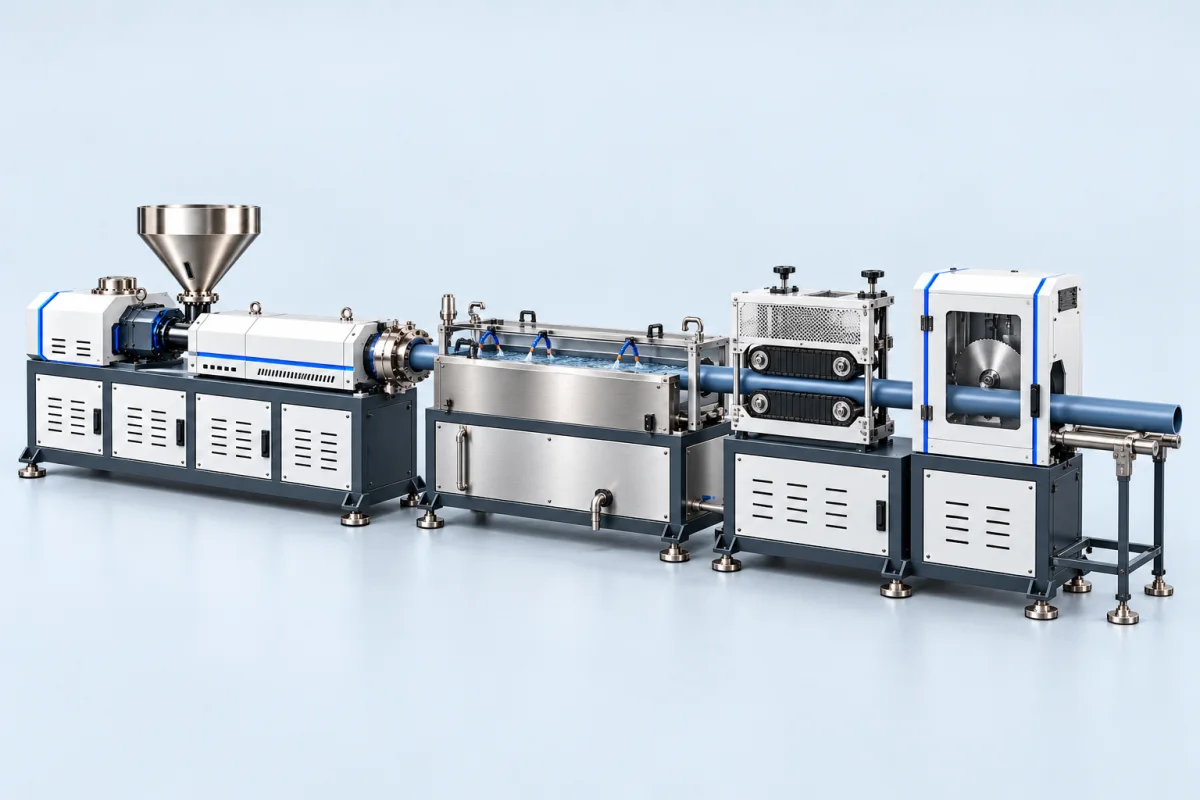
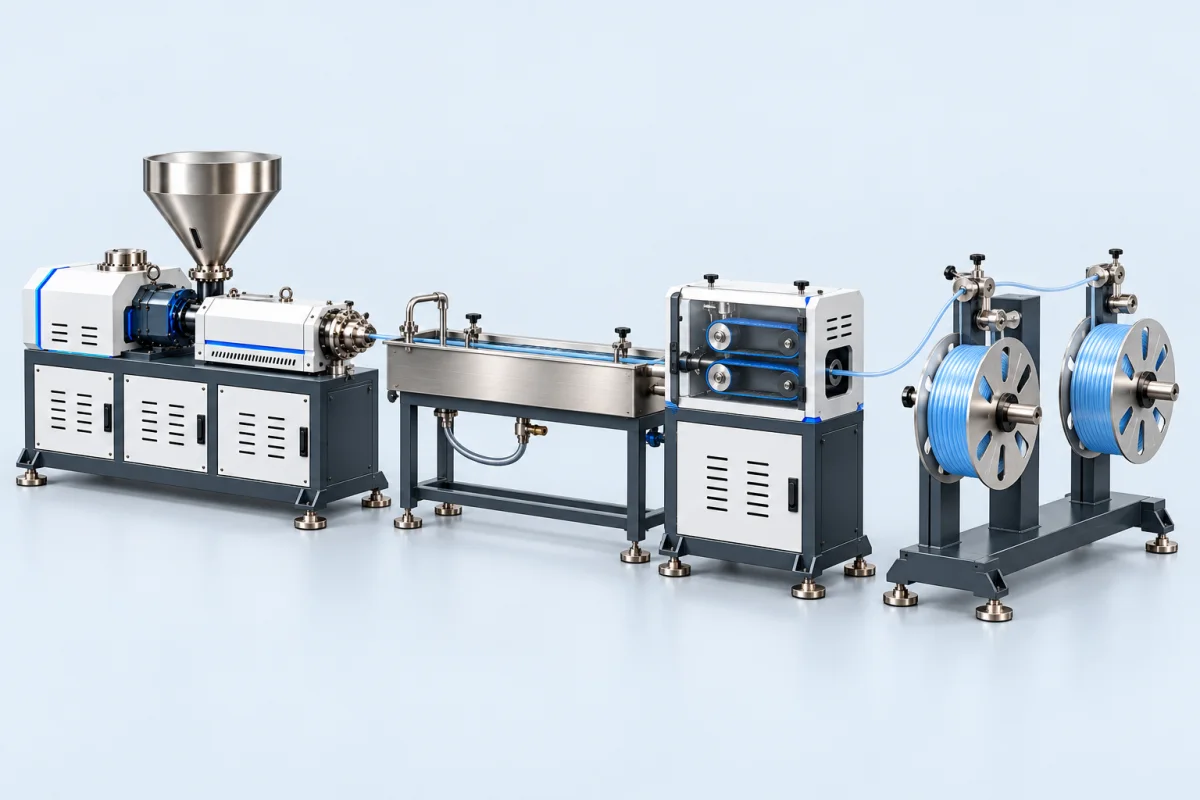
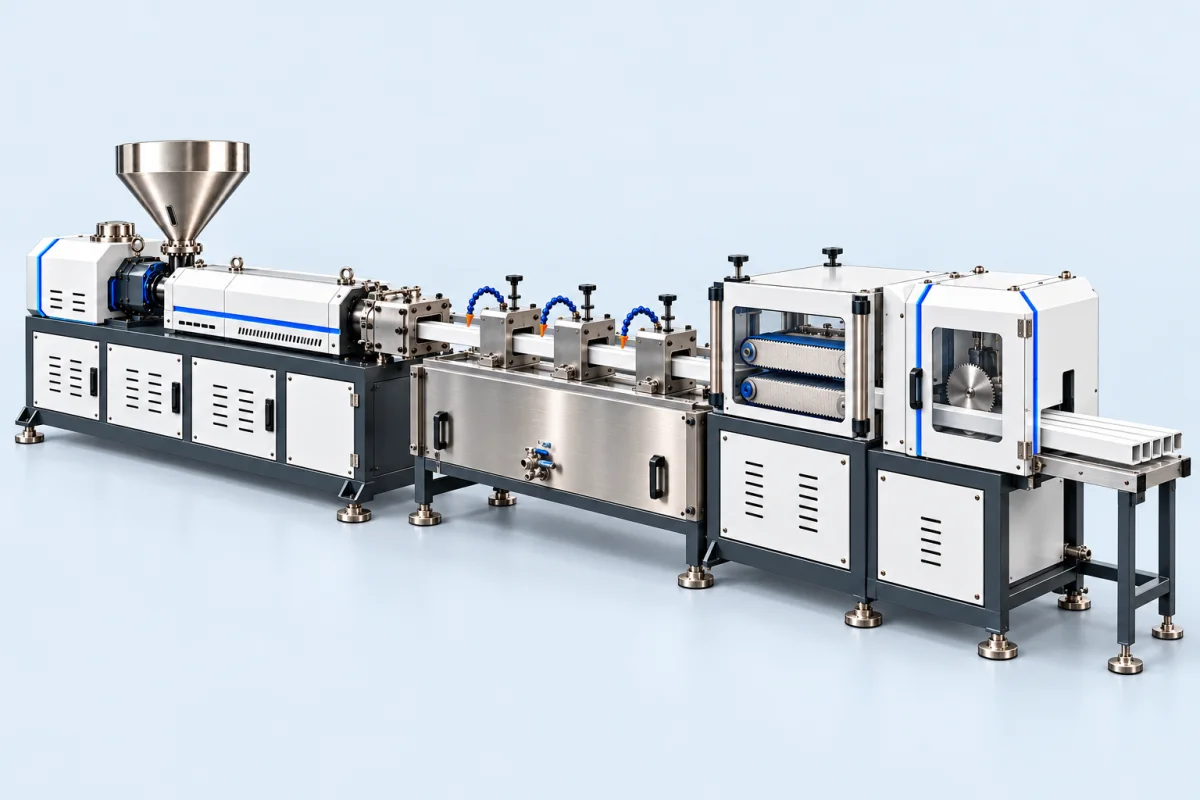
A complete line connects extrusion with shaping, sizing, cooling, pulling and finishing. The required arrangement depends on the geometry and material. Pipe, profile and tubing equipment may share a processing principle while needing different tooling, support, contact conditions or final collection methods. Treat the downstream description as part of the equipment decision from the beginning.
List how the product should leave the line: straight cut lengths, coils or another specified format. Include surface-marking limits, cut-end requirements and handling constraints where these affect acceptance. Show existing equipment that must remain and define its interface. A low extruder-only quote cannot be compared with an entire line total until these supply differences are made visible.
| Quotation item | Information to supply | Scope question |
|---|---|---|
| Extrusion and feed | Resin grade, formulation and primary output case | Which preparation and feed components are included? |
| Tooling and sizing | Drawing revision, critical dimensions and launch sizes | Which tools, change parts and adjustments are priced? |
| Cooling and haul-off | Product support, surface limits and available water conditions | Who supplies the cooling services and connected controls? |
| Cutting or winding | Length or coil format and handling requirements | Where does the supplier’s delivery scope end? |
| Evaluation and setup | Acceptance method, site readiness and trial material | Which tests, installation services and training are included? |
Scroll horizontally to compare all columns.
Allow for site work and operating costs
Keep the quoted equipment price separate from the cost of making the site ready. Confirm the space, access route, electrical connection, cooling arrangement and other services required by the selected configuration. If the proposal depends on a chiller, air system or existing handling equipment, identify who sizes, supplies and connects it. This prevents a missing interface from becoming an unplanned expense after equipment selection.
Build a second worksheet for operation: material loss at startup and changeover, electricity, cooling-system operation, staffing, consumables and routine maintenance. Use the buyer’s actual tariffs and operating schedule. Supplier estimates should state the product and conditions behind them. Compare costs against accepted finished output, and avoid treating installed power or a favorable short trial as a complete shift-cost assessment.
Define trials, changes and commissioning support
A new drawing or tooling arrangement needs a clear route from review to evidence. Agree sample availability, trial material, measurement method and who can accept the product. Ask which tooling or process adjustments are included and when a change requires a separate quotation. Keep the drawing revision with the trial record so the result can be matched to the scope that was ordered.
Clarify responsibilities before shipment and after arrival. Packing, freight, unloading, positioning, connections, installation support, training and site trials may have different suppliers or commercial terms. List included services and exclusions explicitly. A general equipment description should not imply product certification or a specialized application approval; the intended end use and any additional qualification duties belong in the project brief.
Send a quotation package that supports a useful comparison
Prepare the drawing, material information, priority products, output definition, final collection format and measured site plan. Add photographs or a physical sample where helpful, but keep unresolved dimensions clearly identified. Supply the destination country and the desired delivery scope for the commercial discussion. Give the package a revision date so every supplier responds to the same baseline.
For an ARKPM project quotation, email [email protected] or use the project enquiry page. Choose the pipe, profile or tubing family closest to the intended product and explain the decisions you need the proposal to support. All ARKPM product families support customization. A useful response should connect your requirements to a reviewable equipment scope, with optional items and remaining technical questions visible.
- One drawing revision and a clear primary product.
- Identified resin grade, additives and any recycled-content proposal.
- Accepted output target and measurement method.
- Required launch sizes, changeovers and collection format.
- Available site services, destination and agreed scope of supply.
Further technical reading
Manufacturer documentation can help explain process principles. These references do not describe ARKPM equipment or establish ARKPM performance claims.