
Plastic Film Recycling Machine
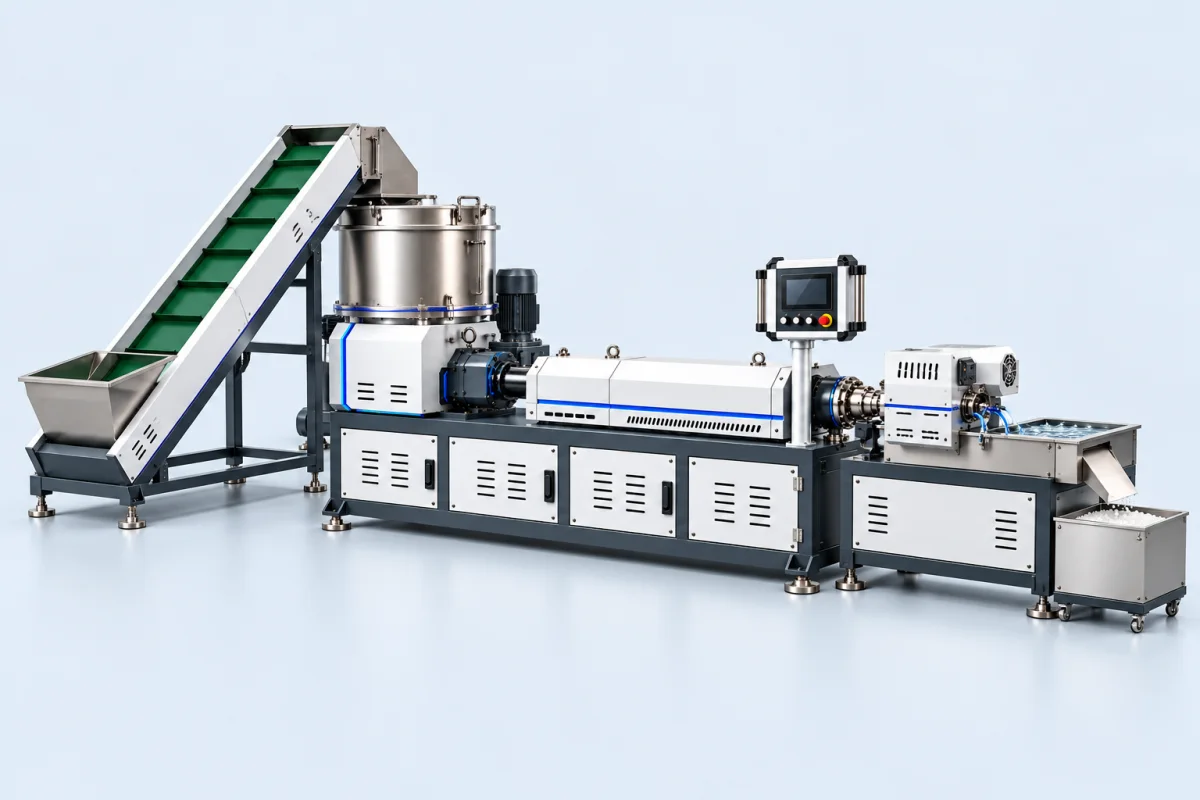
Configure a route from identified PE or PP film scrap to pellets, with film intake, melt treatment and collection matched to the incoming condition and intended reuse.
Explore this lineA recycling project starts before the extruder. ARKPM helps manufacturers define how their own film trim, rejected parts and prepared regrind can move from a known production stream to an agreed pellet application.
Film conversion, molding and extrusion create different production residues. Loose edge trim, rejected rolls, startup material and rigid regrind need to be described separately, even when they share a polymer family. Keeping the stream identifiable makes the equipment discussion more useful and supports consistent evaluation.
Record the resin grade, color, additives and production process that generated the scrap. Explain how it is collected and stored, and whether dust, labels, metal, moisture or another material can enter that route. A factory origin does not by itself establish that the material is ready for extrusion.
The objective is an accepted material for a named use, rather than pellets alone. State whether the output is intended for a defined internal production step or another agreed application. Appearance, cleanliness, material behavior and collection format belong in that brief.
Any planned blend with other resin needs an application-specific acceptance basis. A proposed reuse proportion should be evaluated against the finished product requirements; it is not a universal property of recycled pellets. Keep sample identification and the intended downstream process with the evaluation record.
The supplied process should have a clear starting point and endpoint. Film handling may place emphasis on intake and consistent feeding, while prepared rigid regrind raises different questions about particle condition and hopper flow. Melt treatment and pellet finishing are then reviewed against the material and the required output.
Identify equipment that stays in your factory and the interfaces the new line must accept. Transfer heights, storage, floor space, cooling services and access for routine work can influence the arrangement as much as the extruder itself. Mark sorting, size reduction, washing, drying and utility work as included, optional or supplied separately.
Record how much of each stream is available and how it varies across products, shifts and changeovers. Decide whether the recycling operation will run continuously, in campaigns or from buffered storage. This operating case helps define the useful output requirement and the material-handling arrangement.
Also identify who will collect, inspect, feed and record the material. Startup losses, cleaning, screen service and changes of grade should remain visible in the plan. A headline machine capacity alone does not describe the accepted output that your production team can use over a working period.
An in-house project can be compared with selling scrap, using an external processor or retaining an existing recycling route. Use the same material stream and the same intended reuse when making that comparison. Keep equipment investment separate from installation, utility work and operating costs.
Use your own scrap values, resin purchasing costs, staffing assumptions and available production hours. Evaluate the value of accepted reusable material alongside rejected output and consumables. ARKPM can discuss a project-specific supply scope; the commercial decision should be based on your measured operating case.
For the first review, send a concise description of the scrap, its source, the intended pellet use and the factory interfaces. Highlight which information is measured and which is still an estimate. ARKPM supports customized recycling configurations through Ark Plastics Machinery Co., Ltd., a JianTai subsidiary.
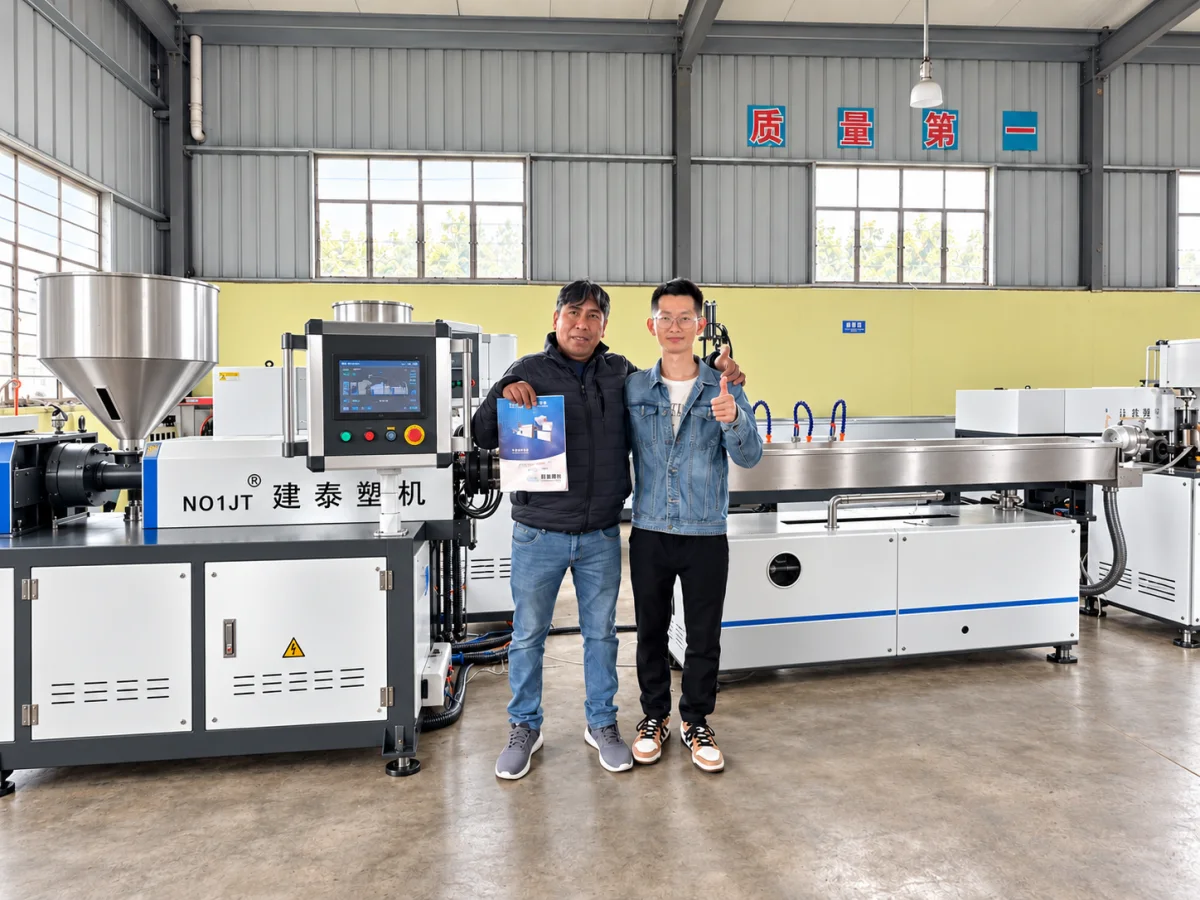
Manufacturing context draws on JianTai, the parent company of Ark Plastics Machinery Co., Ltd. The imagery is AI-enhanced from original photographs; explore the source material below.

Configure a route from identified PE or PP film scrap to pellets, with film intake, melt treatment and collection matched to the incoming condition and intended reuse.
Explore this line
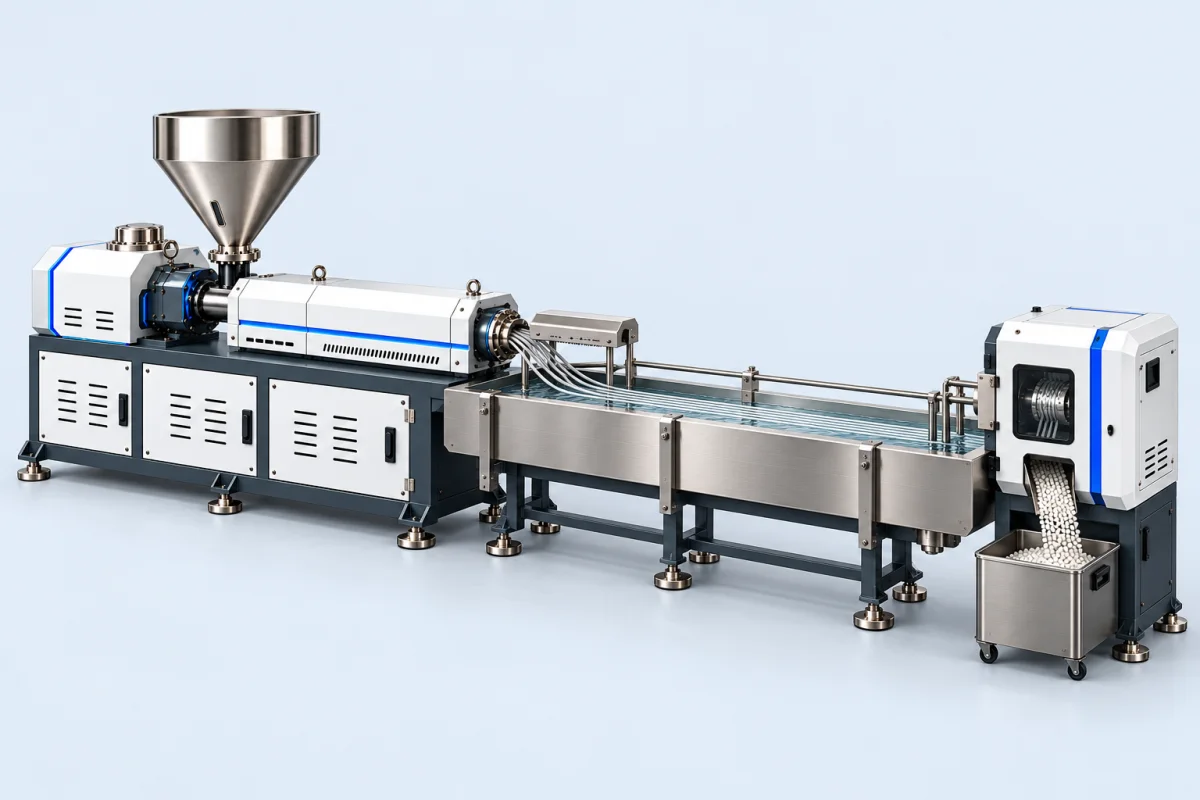
Process identified rigid regrind through a custom extrusion and pelletizing arrangement, with particle condition, feeding, filtration and the next pellet application considered together in the project brief.
Explore this line
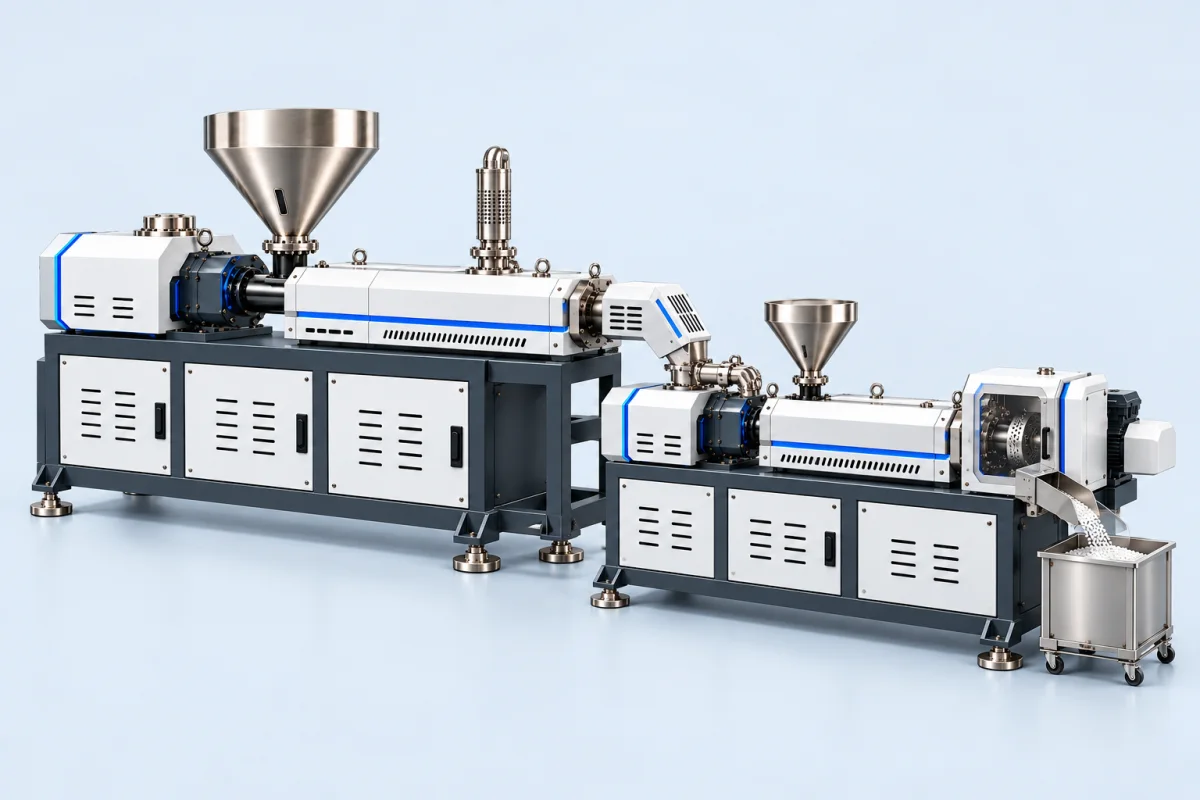
Assess two connected processing stages when the material review supports separate melt-treatment duties, with transfer, filtration, venting and pellet finishing defined together for the proposed recycling process.
Explore this lineShare the incoming condition, intended product and questions you would like the project review to answer.
Discuss your project