
Plastic Pelletizing Machine Trial: What to Measure Before Acceptance
Plan a traceable pelletizing trial: define the feed lot, measurement boundary, run observations and pellet tests before drawing an acceptance conclusion.

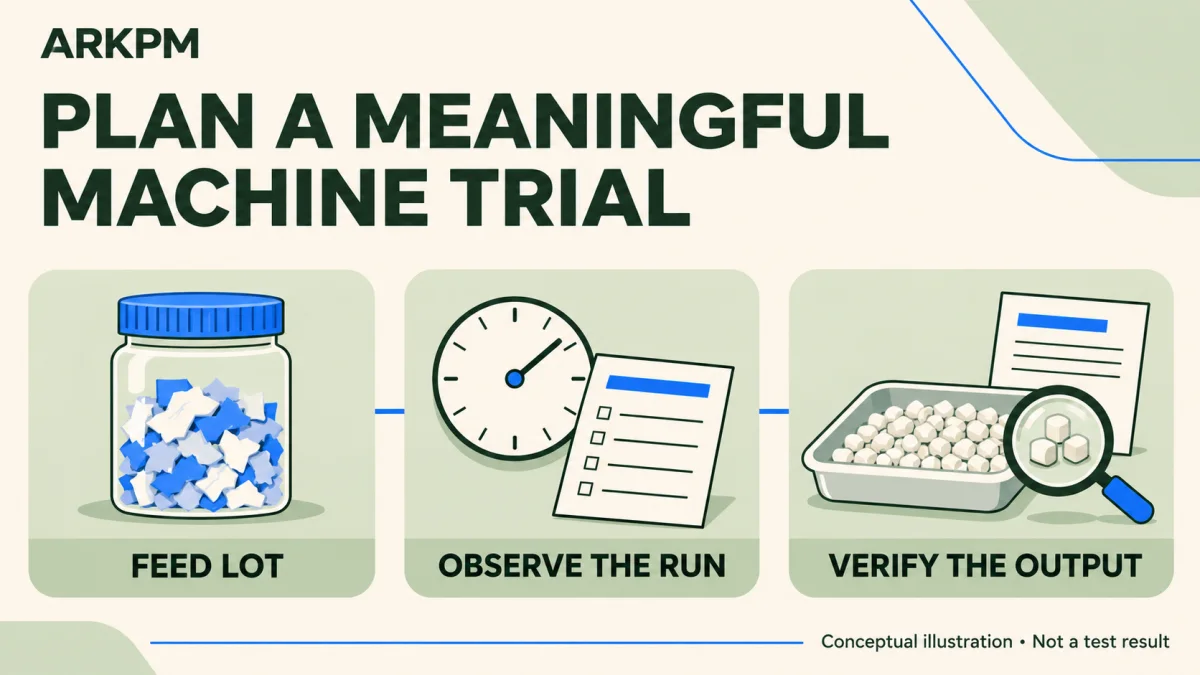
A Trial Should Answer a Buying Question
A plastic pelletizing machine trial is useful when it reduces uncertainty about a specific material and production requirement. Watching pellets emerge from a die shows that material was processed. It does not, by itself, establish acceptable output over a working shift, suitability for the next manufacturing process or performance with a different scrap source.
Before arranging a demonstration, write down the decision it must support. You may need to evaluate feeding consistency, a filtration duty, pellet handling or the reason for a second processing stage. Those questions determine the sample, observations and tests that make the visit worthwhile.
The ARKPM recycling product families are configured around identified feedstocks and agreed scope. The approach below is a preparation framework, not a claim that a particular machine has passed a test or a substitute for a project-specific acceptance agreement.
Connect Every Result to an Identifiable Feed Lot
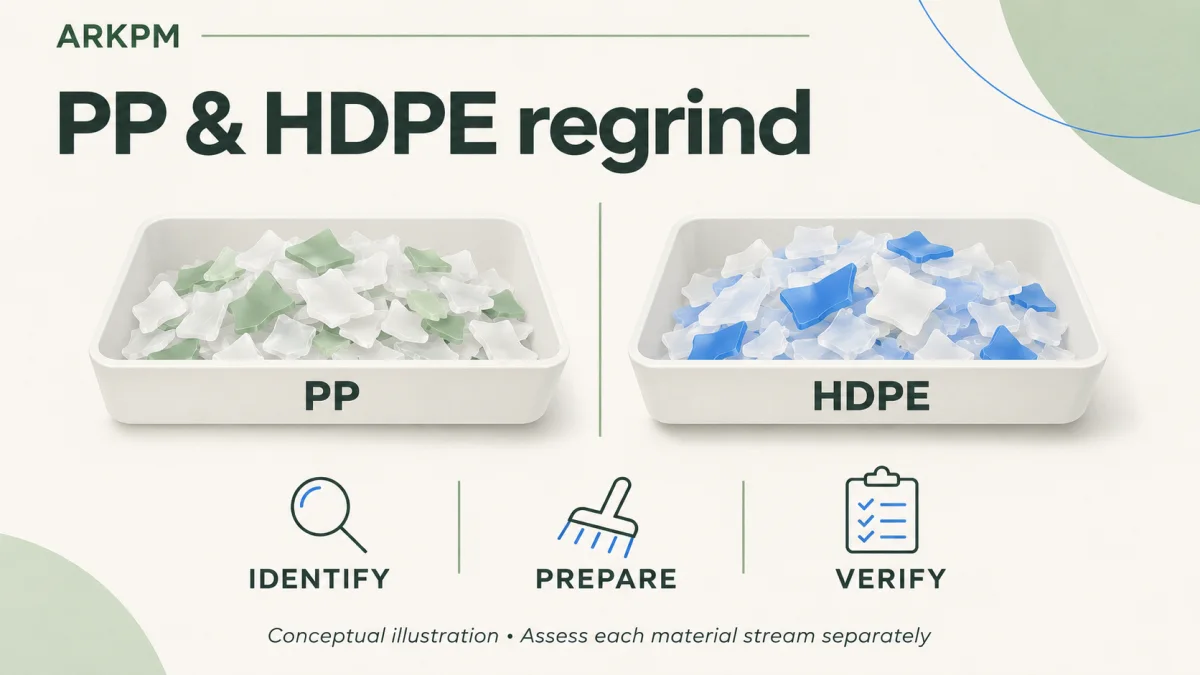
Give each trial material a lot reference. Record its polymer identity, source, preparation history and condition on arrival. Keep photographs and a retained sample where appropriate. A result without a traceable input is difficult to interpret when later production behaves differently.
Discuss whether the sample represents normal supply, a favorable batch or a less favorable condition that the proposed line is expected to handle. If several materials will share the machine, identify which will actually be tested and which remain outside the evidence.
Record any preparation performed before the demonstration. Material that has been additionally sorted, dried or size-reduced is not the same input as the original delivery. That work may be necessary, but it belongs in both the trial report and the eventual supply-boundary discussion.
Agree the Measurement Boundary Before Starting
Define what is being measured and where the measurement begins and ends. A figure for extruder discharge is not automatically a figure for accepted, collected pellets. Likewise, a measurement covering only the extruder does not describe the energy or staffing needs of the entire preparation and finishing route.
For an output comparison, agree the collection point, weighing method and measurement interval. Keep startup material, rejected pellets and material awaiting quality approval distinguishable. If output is reported as a rate, retain the measured mass and elapsed time behind that rate.
Separate a steady-running observation from an elapsed-period result that includes agreed interruptions. Both can be informative, but they answer different questions. A short favorable interval should not be presented as evidence for a longer operating period that was not observed.
Observe the Run, Not Only the Final Sample
Use a time-stamped record to connect output observations with material additions, interruptions and servicing. Include changes in feed delivery, filter interventions and collection problems when they occur. The aim is to understand what supported or interrupted production, not to build a record containing only the best moments.
Agree in advance how any required changeover or maintenance demonstration will be assessed. Qualified personnel should perform operations under the equipment supplier's procedures. A buyer's observation plan is not permission to open guards, approach moving components or improvise operating settings.
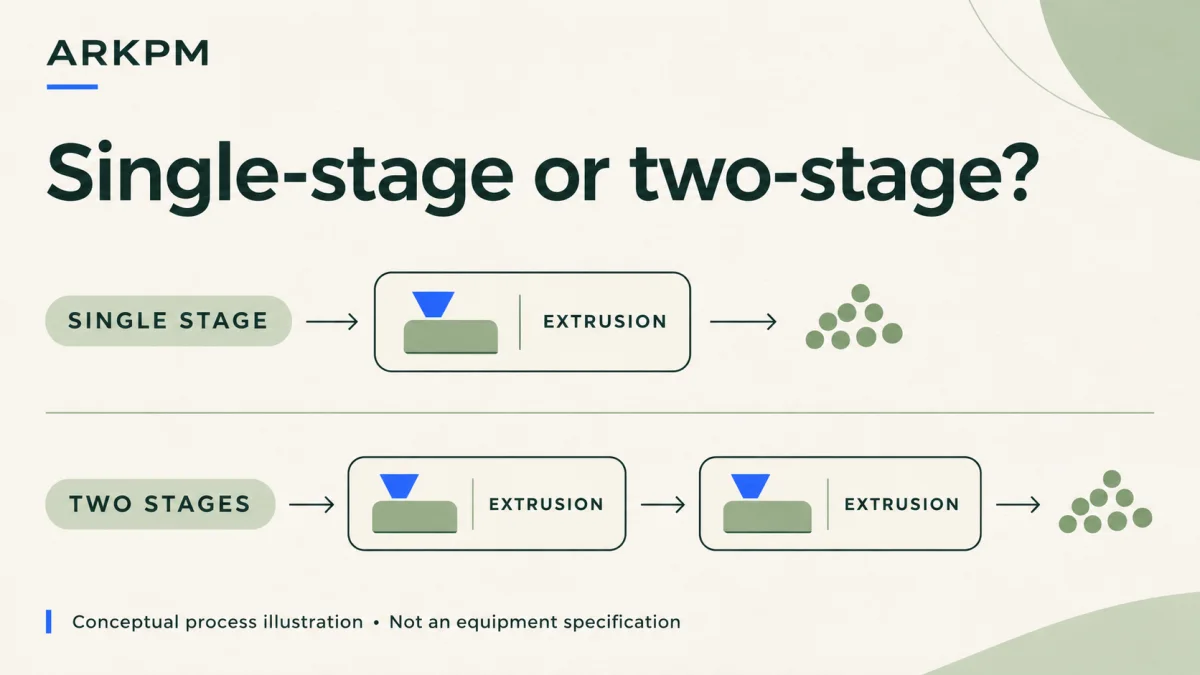
Where a two-stage pelletizing configuration is under consideration, ask what evidence will show the purpose of each stage and the consistency of the transfer between them. Stage count alone is not an acceptance criterion.
Make Pellet Sampling Traceable
Label samples with the feed lot, collection time and relevant run condition. Keep samples from distinguishable periods separate rather than combining them into one attractive display. Agree who retains each sample and how it will be stored and transferred for testing.
Appearance and pellet form are useful observations, but they cannot establish every property needed by a downstream customer. Define the material tests or conversion checks relevant to the intended use, the responsible party and the method for interpreting the results.
If those results will arrive after the machinery visit, record them as pending. Do not turn a visual inspection into an unsupported claim about mechanical properties, food-contact suitability or universal product compatibility.
Separate Process Findings from Equipment Scope
A trial may reveal that the incoming material needs more preparation, that a particular treatment duty requires further assessment or that the collection arrangement needs adjustment. Write each finding against the part of the process it concerns.
For example, an upstream contamination issue should not automatically become a promise that a different melt filter will solve it. The filtration and degassing guide explains why solid-particle filtration, volatile-related treatment and material sorting are different duties.
Then record whether the proposed response is included equipment, an option, retained plant equipment or work by another supplier. A successful demonstration using temporary preparation or handling equipment does not make those items part of the purchase.
Close with a Decision Record, Not Just a Video
A useful trial record identifies what was tested, what was observed, which acceptance criteria were met and which questions remain open. Attach the supporting measurements and sample references. Where a criterion was not tested, state that plainly instead of leaving a blank that could later be read as approval.
Assign the next action for unresolved points: a further material run, laboratory result, configuration revision or clarification of the supply scope. Agree who reviews the evidence and what is needed before the next project decision. Commercial acceptance and its consequences should follow the agreed project documents, not an informal impression from a demonstration.
When preparing to discuss a pelletizing project with ARKPM, send the feed information, intended pellet use and the questions a trial must answer. That gives the equipment discussion a concrete destination: evidence about your material and proposed configuration, with its limits visible.