
PP and HDPE Regrind Pelletizing: Feed Preparation and Quality Checks
Define PP or HDPE regrind by source, particle condition and preparation history, then connect incoming-feed checks to pellet acceptance and equipment scope.

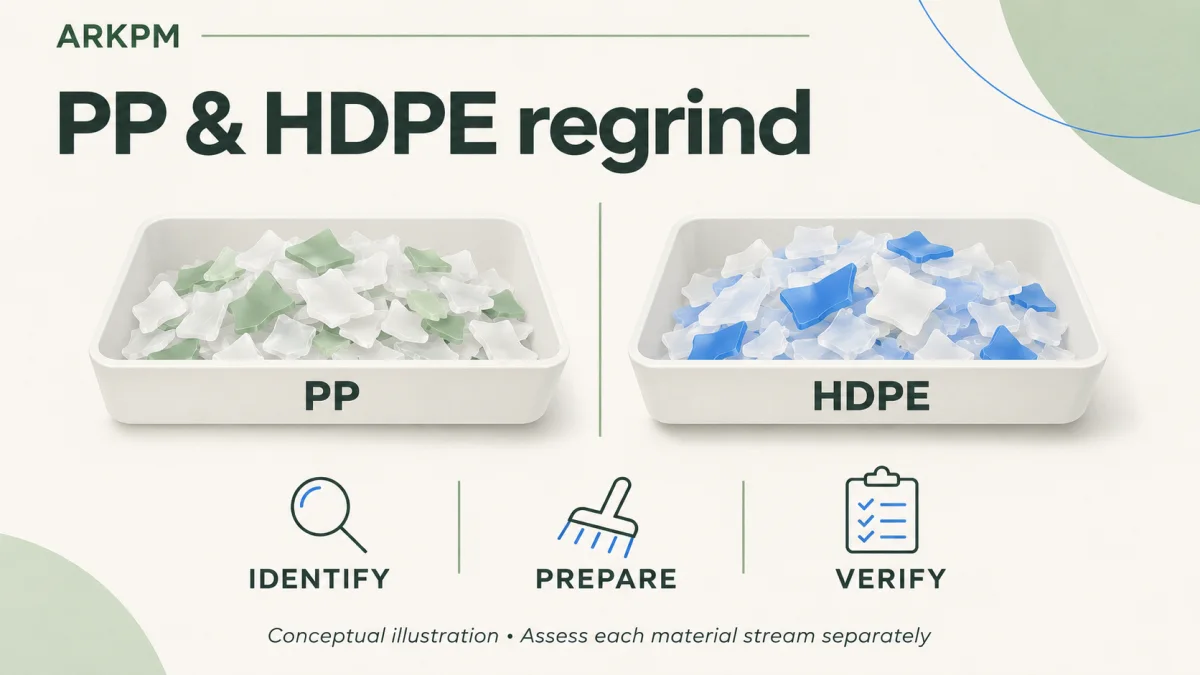
Start with the Regrind, Not the Machine Size
PP and HDPE regrind pelletizing starts with a defined incoming material. A line selected for segregated molding rejects may need a different preparation and treatment scope from one processing recovered container flakes. The polymer name matters, but it is only part of the specification.
Before requesting equipment, describe what reaches the extruder intake: the source of the scrap, its particle distribution, preparation history and expected variation. Then define where the pellets will be used. This connects the feed condition to the equipment decision and the checks used to release finished material.
ARKPM develops rigid plastic recycling configurations for identified HDPE or PP regrind. Other rigid thermoplastics require a separate assessment. A proposed system begins at an agreed prepared-feed handover, with upstream equipment and responsibilities identified separately.
Keep PP and HDPE Streams Identifiable
Do not describe a batch simply as “hard plastic.” Record its polymer, source products, known grades, colors and formulations. PP molding rejects and HDPE container flakes should remain distinct during evaluation, even when they look similar or will eventually use the same equipment.
Sharing a line is not the same as mixing feedstocks. If different materials will be processed in separate runs, describe the changeover sequence and acceptable carryover. If an intentionally blended material is proposed, its composition and suitability for the intended product need their own evaluation.
Unknown material should remain identified as unknown. Appearance and source labels are useful records, but they should not substitute for the material evidence required by the agreed specification. Keep a sample and lot reference so a later pellet result can be traced to the feed used.
Define the Preparation Boundary
Whole rejects, shredded pieces and washed flakes are different starting points. State which one the quotation assumes. Sorting, size reduction, washing, drying and storage should each be listed as included equipment, retained equipment or work supplied by others.
For clean production rejects, explain how the scrap is collected and kept separate from other materials. For recovered rigid-container flakes, describe the sorting and washing route and any remaining labels, closures, residues or other visible contaminants. These are different feed cases, not interchangeable demonstrations of machine suitability.
If existing preparation equipment will be retained, provide its actual discharge condition and operating limits. A layout connection does not establish that the upstream process can consistently deliver suitable material.
Check Particle Distribution and Feeding Behavior
A single maximum flake dimension does not fully describe regrind. Include representative photographs and information about the spread of particle sizes, oversize pieces and fines. Describe how the material leaves storage and reaches the feed system.
Material passing through a hopper opening is not proof of stable feeding. The review should consider bulk flow, transfer method, buffer capacity and the relationship between upstream delivery and extruder demand. Ask how the proposed arrangement will be evaluated with the actual regrind rather than a convenient substitute.
During a trial, record changes in material delivery alongside output observations. If output varies, this record helps separate an upstream supply problem from a requirement that belongs to the extrusion stage. Do not assume a larger extruder will compensate for inconsistent feed delivery.
Describe Moisture, Fines and Contamination Separately
Keep these observations separate in the material brief. State whether moisture information comes from a measurement or a visual estimate, identify the sampling point, and record whether the sample was taken before or after storage. Agree the relevant incoming limits and test methods for the selected configuration instead of adopting a universal value.
Document the solid contaminants expected after preparation and the variation between lots. Melt filtration is not a substitute for polymer identification and sorting: another polymer may also melt and pass through the process. A finer filter should not be presented as a universal solution to mixed material.
Review the selected filtration duty, servicing requirements and pellet acceptance criteria together. The filtration and degassing guide explains why different treatment functions need separate specifications.
Define Pellet Quality by the Next Use
“Good pellets” is not a measurable acceptance requirement. Describe the intended manufacturing process and the checks that matter to it, including appearance, contamination and any material-property requirements. Identify who will test the samples and who can approve a production lot.
Keep pellet size and handling requirements visible alongside material quality. Collection format, storage, identification and transfer to the next process are part of the project, not details to resolve after installation.
Where several colors or formulations will share the equipment, discuss cleaning access and changeover expectations before choosing the configuration. A trial on one material does not establish suitability for every future grade or source.
Evaluate a Representative Run, Not a Short Favorable Interval
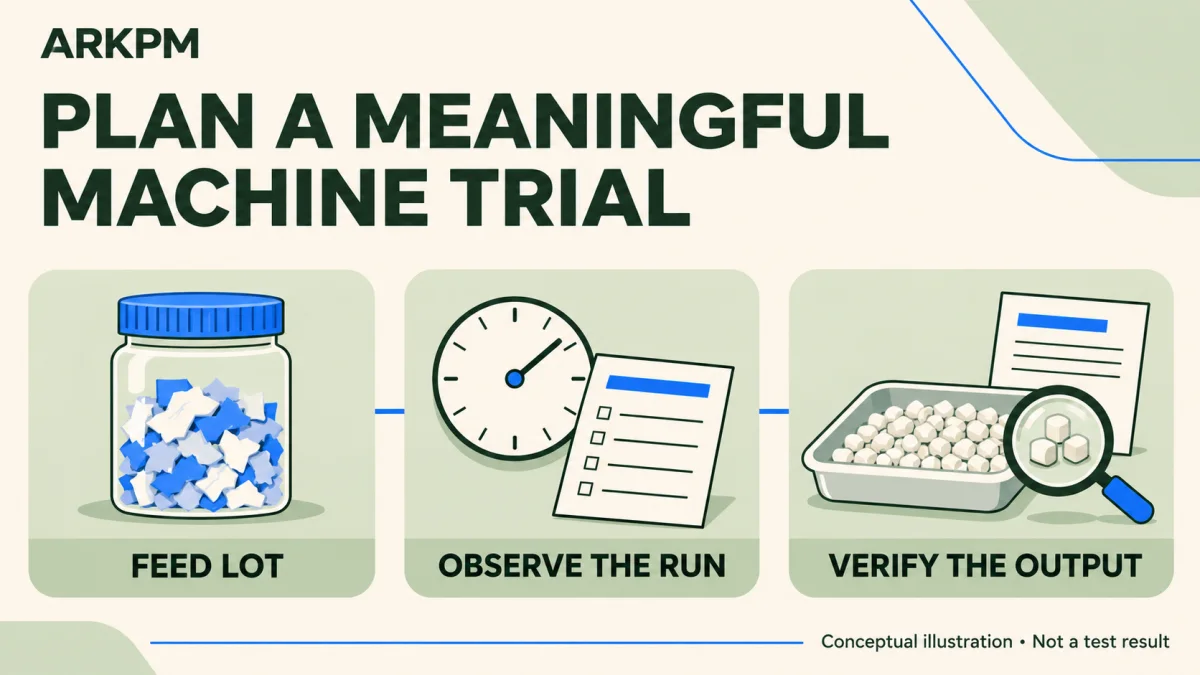
A useful trial follows the material from its prepared-feed condition to accepted pellets. Record the lot, preparation details, operating period, interruptions, filter servicing and rejected or startup material. Keep total produced material separate from material accepted against the agreed criteria.
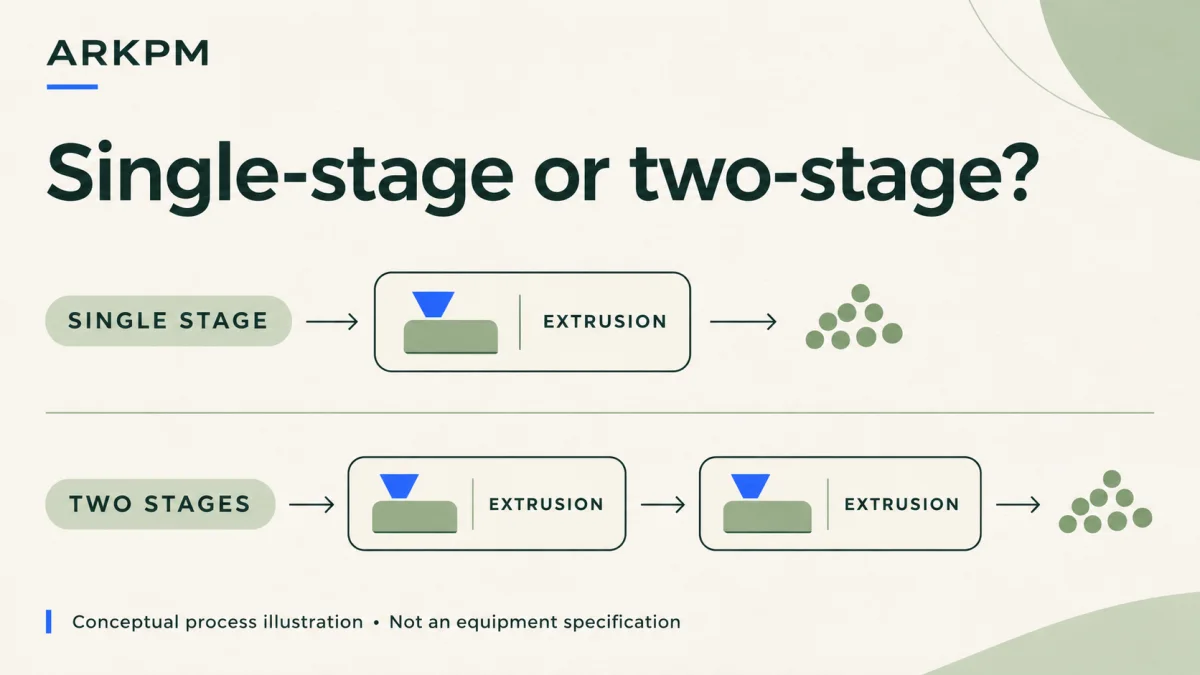
Compare proposed configurations using the same feed conditions and acceptance rules. If a second stage is suggested, ask which unresolved duty it addresses; regrind alone is not a reason to add one. The single-stage versus two-stage comparison provides a framework for that decision.
The trial report should also record what remains unverified. A limited material sample, short operating period or missing application test is a boundary on the evidence, not a reason to turn the demonstration into a broader performance claim.
Prepare an Enquiry That Supports a Specific Proposal
Send resin identification, source-product photographs, representative regrind samples and the available particle, moisture, fines and contamination information. Include the preparation equipment already available, required output, shift pattern and intended pellet application.
Separate confirmed measurements from estimates. Add plant utilities, storage and transfer arrangements, collection requirements and the materials expected to share the line. These details help define the incoming material envelope and the scope that the proposed equipment must cover.
Discuss your PP or HDPE regrind project with ARKPM using that material brief. The next step is a configuration and evaluation plan tied to your actual feedstock, rather than a generic machine selection based only on nominal capacity.