
Single-Stage vs Two-Stage Plastic Pelletizing: How to Choose
A second extrusion stage should solve a defined processing problem. Compare both configurations using the same feedstock, pellet requirements and evaluation conditions.

Single-Stage and Two-Stage Pelletizing Serve Different Processing Needs
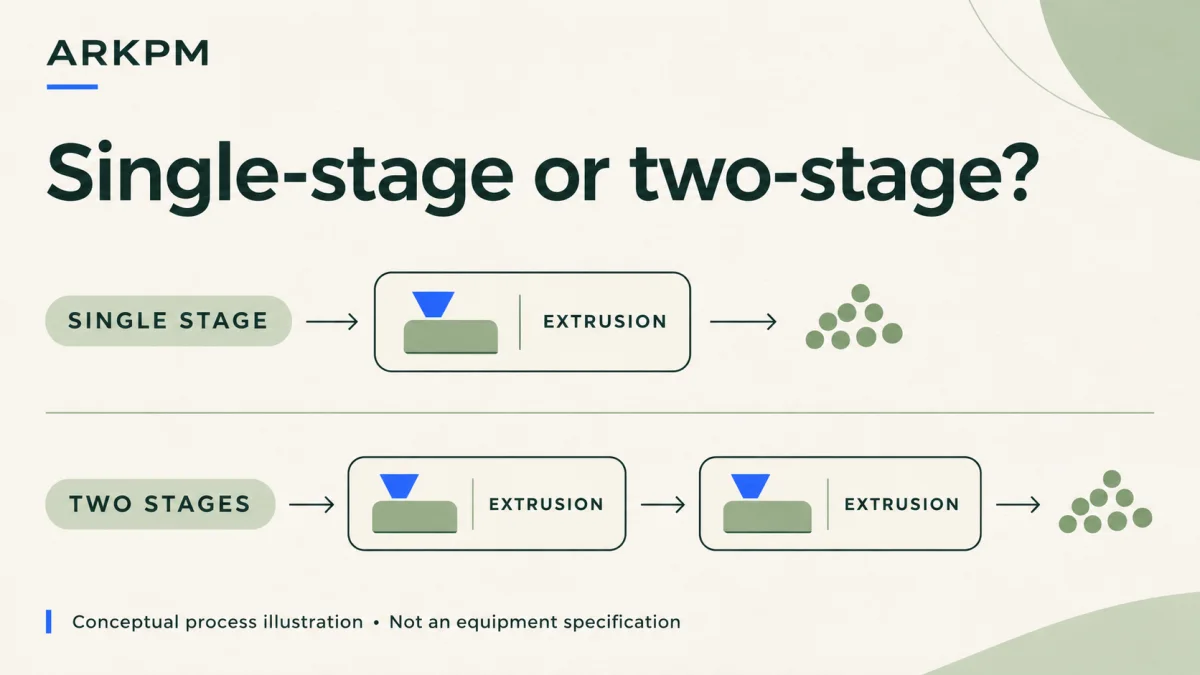
Single-stage plastic pelletizing uses one extrusion stage to prepare the melt for pellet production. A two-stage arrangement introduces a second extrusion stage with a separately defined duty and an interface between the processing units. The right choice depends on the material entering the line, the treatment it needs and the quality required from the finished pellets.
Two-stage is not automatically a higher-quality option. A well-specified single-stage configuration may suit a stable material stream, while a staged arrangement may be worth evaluating when separate processing duties are justified. Compare the complete process rather than choosing by the number of extruders.
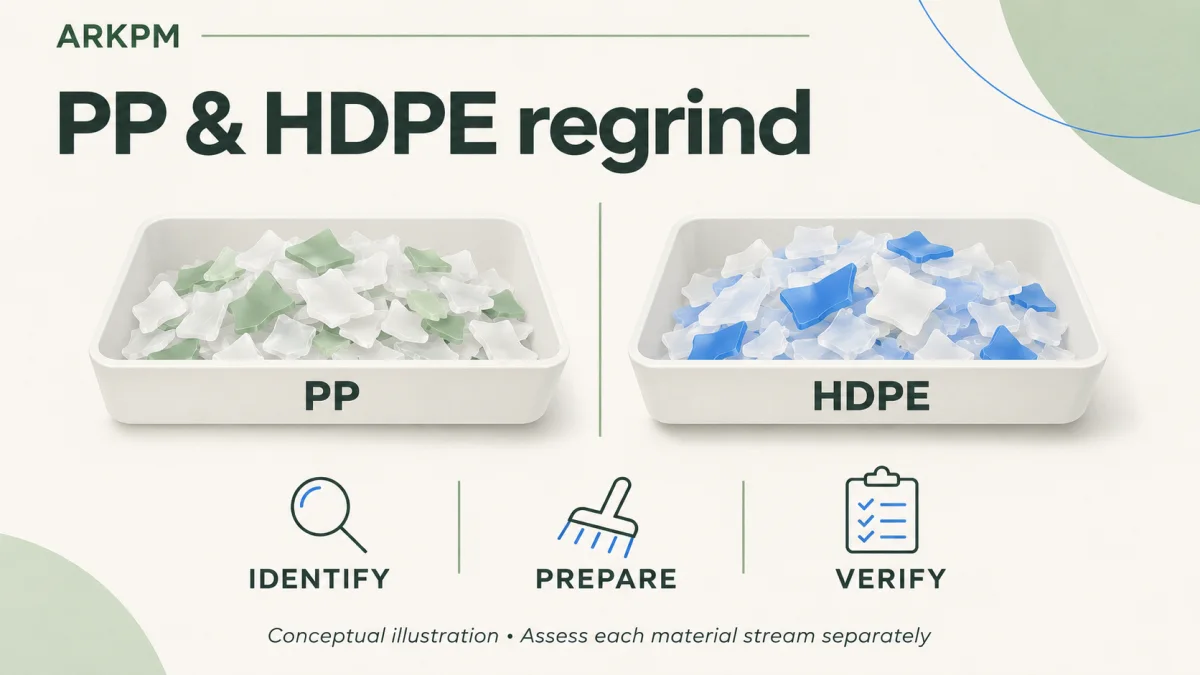
This guide focuses on evaluating configurations for identified PE and PP recycling streams. Material suitability and performance still need to be established for the proposed equipment.
What Does the Second Stage Actually Do?
A two-stage proposal should explain the condition of the material leaving the first stage and the task assigned to the second. That explanation matters more than a label such as “double-stage recycling machine.”
The design should identify the treatment sequence, transfer arrangement, filtration and venting provisions, and pellet discharge method. Their location and capability depend on the selected equipment and feedstock. Two machines described as two-stage systems may therefore have different operating requirements.
Two-stage also does not mean twin-screw. Stage count describes the process arrangement; screw configuration describes an individual extruder. A quotation should identify both explicitly.
ARKPM’s two-stage pelletizing machine is developed around defined processing duties, including the interface between stages and the selected melt-treatment and pellet-finishing arrangement.
When Is a Single-Stage Configuration Worth Evaluating?
A simpler configuration is worth considering when the material is well characterized and the required process can be completed within the proposed equipment scope. The useful question is whether that configuration can consistently produce acceptable pellets from the actual feedstock, not whether it has fewer components.
For example, identified production scrap with a consistent preparation history presents a different evaluation case from a variable stream containing printing, moisture or contamination. Even apparently clean scrap needs a clear description of polymer, additives, physical form and intended reuse.
A single-stage proposal should still explain feeding, melt treatment, filtration, pelletizing and collection. “Single-stage” alone does not establish which functions are included or whether the equipment suits the material.
When Should You Consider Two-Stage Pelletizing?
Consider a staged arrangement when there is a specific requirement that warrants separating processing duties. The supplier should explain what the additional stage is intended to address and how its contribution will be verified.
Printed or moisture-bearing PE and PP materials require representative sample assessment before their suitability is confirmed. Printing history or visible moisture is not, by itself, proof that a two-stage line is necessary or sufficient.
A useful comparison begins with an observed issue or a defined treatment requirement. If an existing process produces inconsistent pellets, document the material conditions and quality observations first. Do not assume that adding another extruder will resolve a problem originating in unsuitable feed preparation or an incorrectly specified treatment system.
Compare Filtration and Degassing Separately
Filtration and degassing address different treatment duties. Their inclusion, arrangement and service requirements need to be specified for the material rather than inferred from the number of processing stages.
Ask what the filtration system is expected to remove, how servicing affects operation and what feed conditions the proposal assumes. For venting or degassing, define the treatment purpose and the evidence needed to assess its result.
A two-stage configuration should not be presented as a universal odor-removal solution. Material history, the nature of the substances involved and the actual treatment design all matter. If odor is an acceptance concern, agree on an evaluation method before using it to compare equipment.
The melt filtration and degassing guide explains why these functions belong in a material-specific process brief.
Look Beyond the Equipment Purchase Price
A second processing stage introduces additional interfaces to specify and maintain. Review the transfer route, temperature control, monitoring, coordinated startup and shutdown, cleaning access and response to interrupted flow.
Compare the complete installed scope, including utilities, access and downstream equipment. A quotation with fewer included services or a different feed-preparation assumption is not directly comparable simply because its total is lower.
Operating costs should be evaluated against accepted pellet output. Use measured electricity consumption, actual consumable use and recorded operating interruptions over a defined period. Installed motor power is not the same as electricity consumed per kilogram, and headline capacity is not the same as saleable output over a shift.
Use the Same Trial Conditions for Both Options
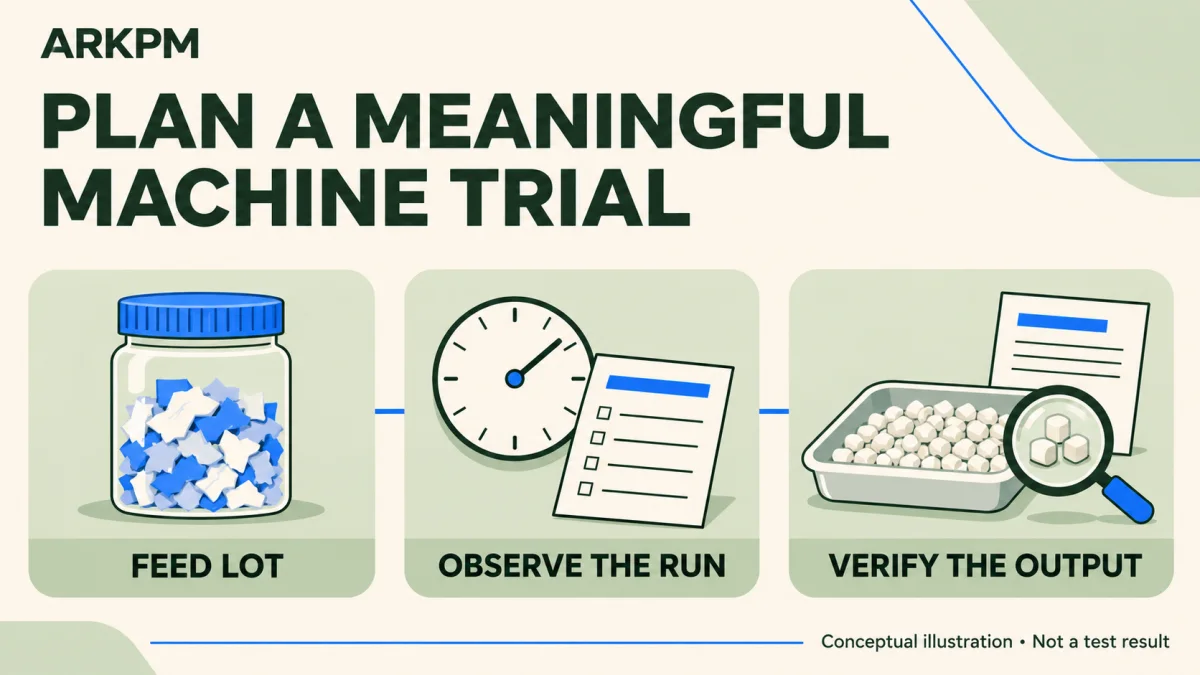
A meaningful evaluation uses representative feedstock and the same finished-pellet requirements. Record how the material was prepared, which production lot was used and what changes occurred during the trial.
Assess stable material transfer, filtration servicing, interruptions and accepted output together. Where a staged arrangement is proposed, the evaluation should show how both stages operate as a connected system rather than demonstrating each unit in isolation.
Define the pellet checks around the next manufacturing process. Appearance, consistency and other application-specific requirements should be agreed before the trial. Avoid comparing one configuration using an easy demonstration material with another using the more demanding material that the factory will actually process.
Prepare a Material-Based Configuration Brief
Start with polymer identification, material photographs, preparation history, printing or contamination information, intended pellet use and required output. Include existing process observations if a second stage is being considered to address a known problem.
Then add the available plant space, utilities and maintenance constraints. These details allow the proposal to explain the selected process, its interfaces and any unresolved questions.
For an ARKPM configuration review, submit your project requirements with the material information you already have. The aim is to establish whether a single-stage or two-stage arrangement better supports the agreed production duty, with a clear basis for comparing and validating the proposed equipment.